By Jean Couteau. A French writer, cultural observer and scholar who has lived in Bali for more than four decades. A graduate of the École des Hautes Études en Sciences Sociales, he is widely recognised for his writings on Balinese culture, society, art and contemporary life.
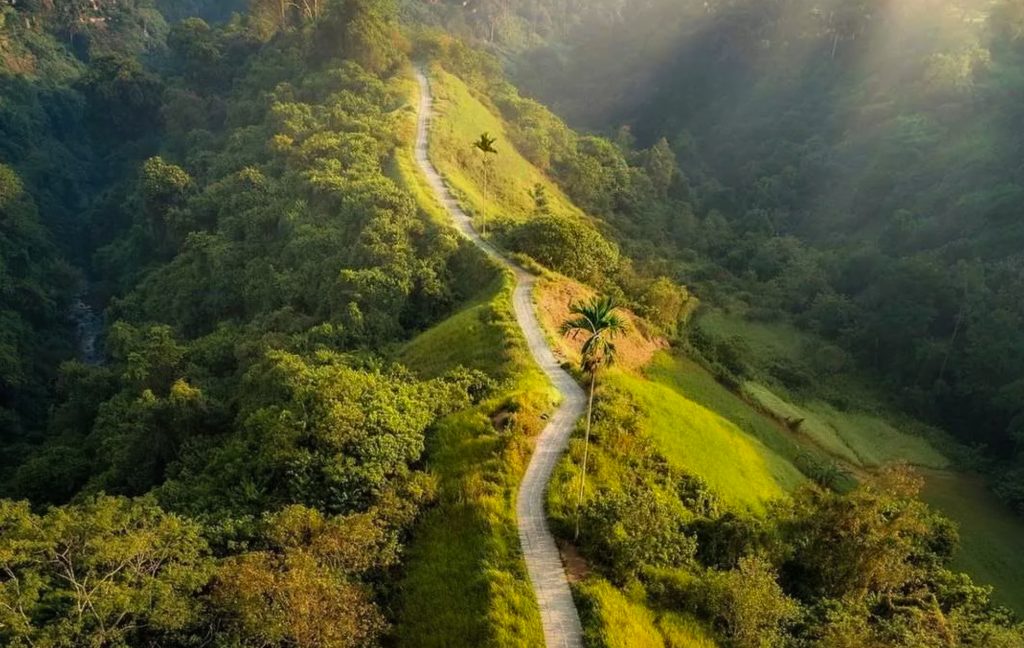
Deep in the heart of Ubud, nature carved a masterpiece of earth and water, anchored by the legendary Campuhan Ridge. For nearly ten kilometers, two powerful rivers—the Oos and the Tukad Yeh Wos—run parallel through the Balinese landscape, carving deep, dramatic gorges of dense tropical jungle and volcanic stone.
As they journey southward, the land between them gradually constricts, forcing the parallel gorges closer and closer together until they form a narrow, dramatic spine of earth. This culminating ridge—swept by breezes and flanked by steep, emerald-green drop-offs—races forward like a natural prow before finally plunging into a breathless finale: the exact point of confluence where the two rushing waters crash and merge into one.
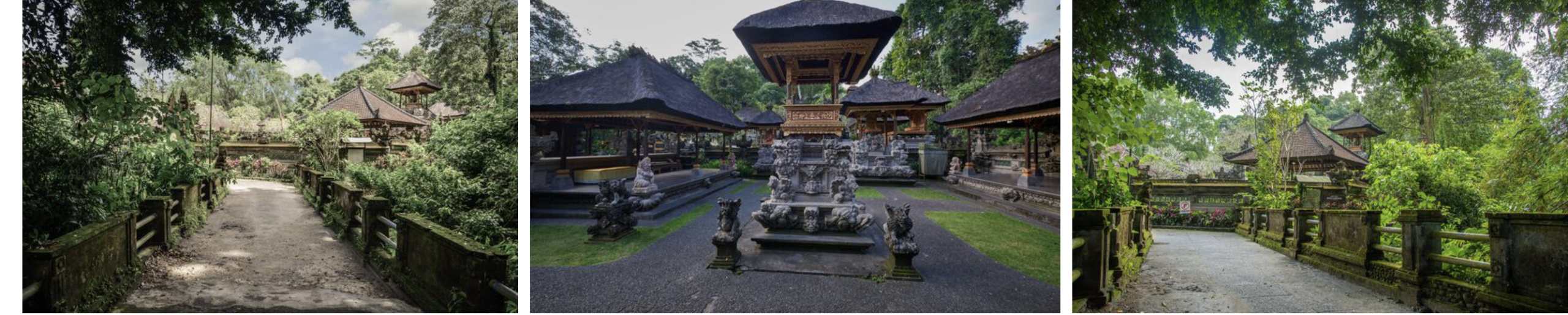
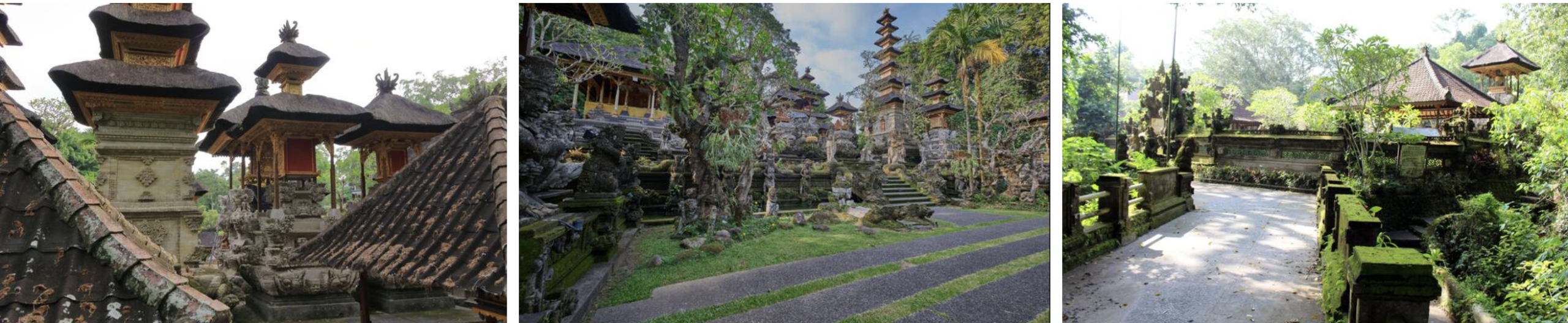
Perched precisely at this sacred apex, where the twin rivers finally embrace, stands Pura Gunung Lebah (The Temple of the Mountain on the Valley). In Balinese, campuhan translates directly to “meeting place,” and this ancient sanctuary was erected to honor the immense spiritual and geological energy generated by the convergence.
Standing atop the ridge looking down at the river and on an easy path is an extraordinary landscape for 1 or 1.5 km temple until one arrives at the other, northern end of the path. One can either continue and witness the ridge widening into a ricefield landscapte, but the best is to come back, being either picked up by car at the end of to the path or simply walking back to Cucu restaurant for a drink.
Phase I: The Vision on Mount Raung
Centuries ago, the revered sage Empu Markandaya sat in deep ascetic meditation (tapa brata) on the rugged slopes of Mount Raung, near the eastern extremity of Java. During his communion with the divine, he received a powerful cosmic revelation: a vision of a long, elongated island lying just across the narrow strait to the east—an island known anciently as Nusa Dawa (Long Island, which would become Bali).
A divine voice instructed him to cross the waters, clear the dense, primeval forests of this new land, and bring civilization and agriculture to its indigenous inhabitants.
Phase II: The First Expedition and Tragic Failure
Empu Markandaya gathered a massive group of followers—historical accounts note hundreds, and sometimes thousands, of hardy mountain people (Wong Aga) from the foot of Java’s volcanoes. They crossed the choppy, narrow currents of the Bali Strait (Segara Rupek) and marched straight to the foothills of Mount Toh Langkir (the ancient name for Mount Agung), the spiritual apex of the island.
Here, they set to work hewing down the thick, primordial jungle to carve out settlements and fields. However, disaster struck. The forest pushed back with a terrifying, unseen vengeance.
Realizing that human will alone could not conquer a land dominated by fierce unseen spirits, the expedition collapsed. With a heavy heart, Markandaya ordered the surviving remnant of his people to abandon the clearing and retreat back across the sea to Mount Raung in Java.
Phase III: The Revelation of the Panca Datu
Back on the familiar heights of Mount Raung, Markandaya did not give up. Instead, he plunged back into a profound state of deep meditation and prayer, seeking to understand why the gods had rejected their initial attempt.
In his trance, the answer was revealed: they had tried to take the land physically before harmonizing with it spiritually. To tame the earth, one must first anchor the cosmos into the soil. He was instructed to return to Bali, but this time, he must perform a supreme earth-pacifying ritual (yadnya) centered around the Panca Datu—the five sacred metals (gold, silver, copper, bronze, and iron), often accompanied by a sacred gemstone (Mirah Adi). These elements represented the physical essence of the universe and the foundational anchors of equilibrium.
Phase IV: Return to Besakih and the Birth of the Mother Temple
Empu Markandaya returned to Bali with a smaller, highly disciplined group of about 400 devoted followers.
Marching back to the slopes of Mount Agung, he executed the sacred rituals precisely as guided. He consecrated the earth by burying the Panca Datu deep in the volcanic soil. This time, the forest yielded peacefully. The disease and hostility vanished. The site where this miraculous ritual took place grew and evolved over centuries to become Pura Besakih, the ultimate “Mother Temple” of Bali.
Phase V: The Confluence of Campuhan and the Cultivation of Ubud
With the spiritual gateway of the island secured at Besakih, Markandaya and his followers pushed further into the interior, mapping the sacred geography of the island.
They eventually arrived at the dramatic landscape of Campuhan in modern-day Ubud—where two deep, parallel gorges carved by the Oos rivers converge into a narrowing ridge. Recognizing the immense spiritual power (sakti) of this natural vortex, where water and earth violently yet harmoniously meet, the sage established his ashram and a sanctuary known as Pura Gunung Lebah (The Temple of the Mountain on the Valley).
From this energetic nodal point at Campuhan, Markandaya organized the distribution of land. Utilizing the spiritual authority anchored by the temple, he mapped out the irrigation, terracing, and cultivation of the ten-kilometer stretch of land running northward back toward the mountain springs.
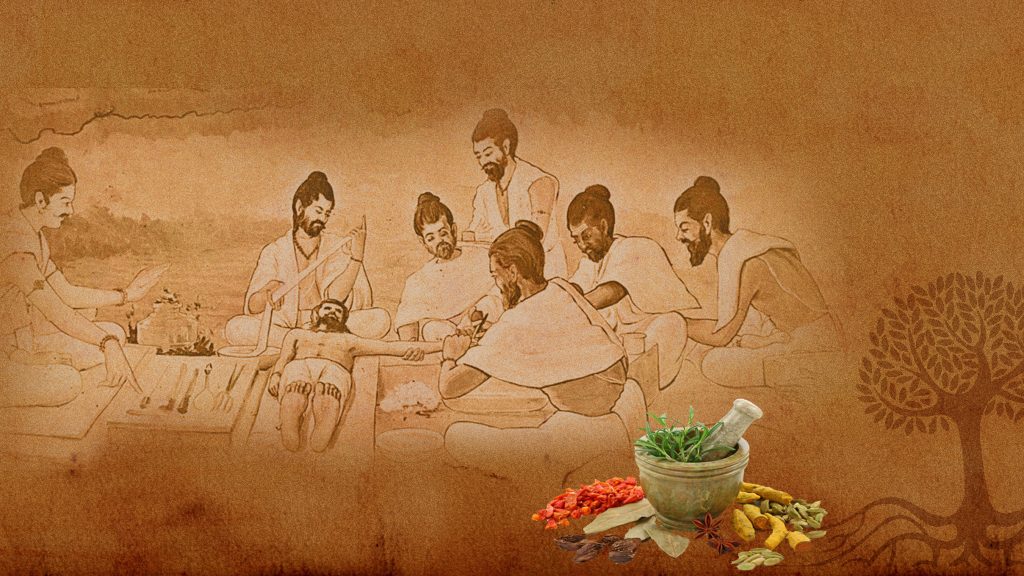
The wild, untamed jungle was successfully transformed into a thriving ecosystem of engineered rice paddies—giving birth not only to the physical landscapes of Ubud (whose name stems from ubad, meaning medicine/healing, due to the medicinal plants found along the riverbanks) but to the enduring harmonious civilization of Bali itself.