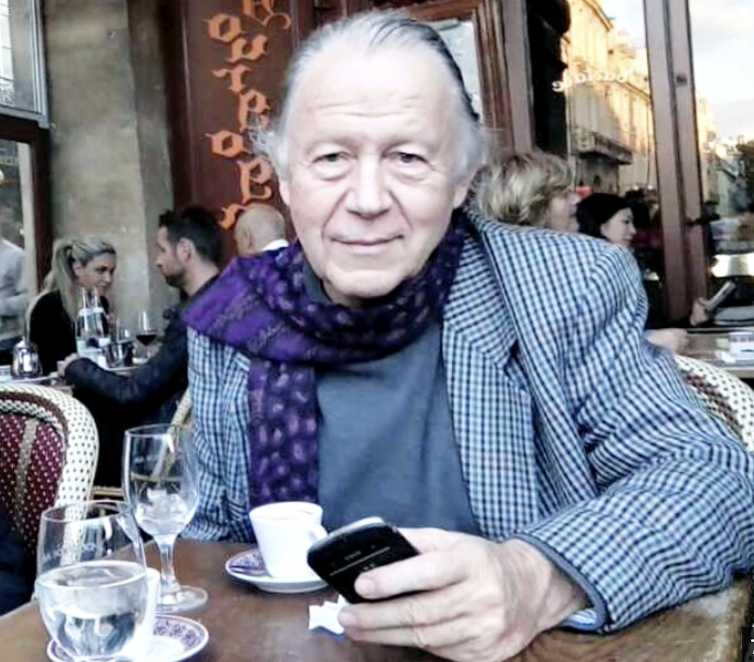
By Jean Couteau. A French writer, cultural observer and scholar who has lived in Bali for more than four decades. A graduate of the École des Hautes Études en Sciences Sociales, he is widely recognised for his writings on Balinese culture, society, art and contemporary life.
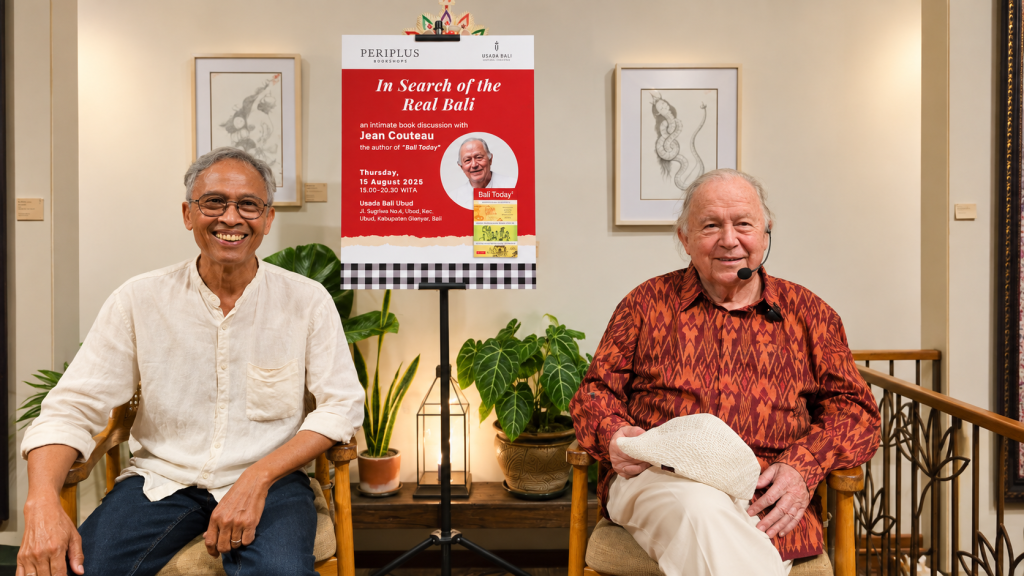
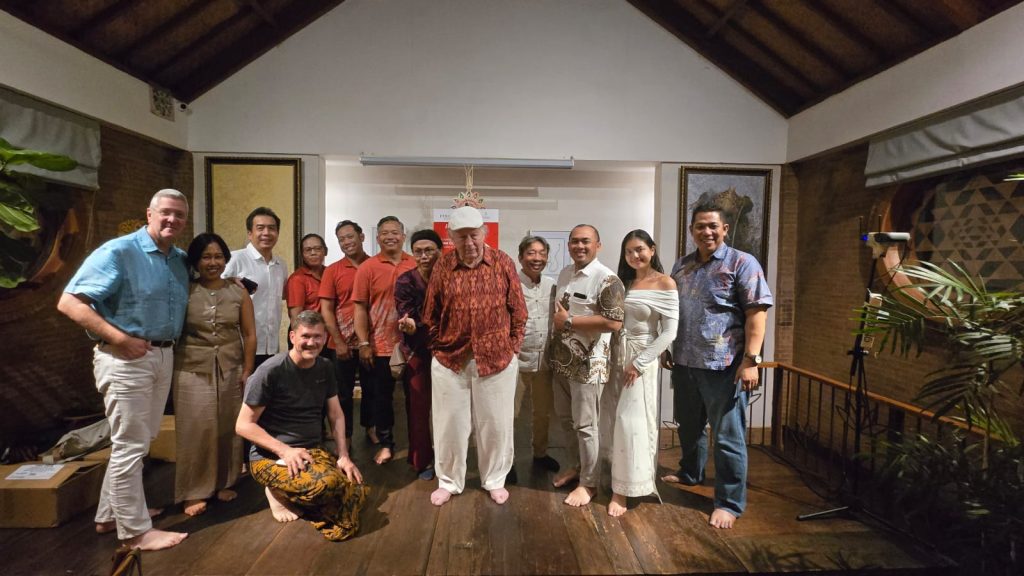
At Usada, in collaboration with Periplus, a gathering to celebrate the launch of Bali Today: In Search of the “Real Bali” became much more than a book launch. Together with Ketut Yuliarsa presenting, It was an evening of stories, memories and reflections on a Bali that has changed profoundly over four decades, and on the complicated art of writing about a place you have come to love without turning it into an idealised version of itself.
Couteau first arrived in Bali in the 1980s, after completing his PhD and returning to Indonesia for personal reasons. He found himself between worlds. He was French, newly arrived, and initially spoke poor English, yet he gradually became deeply immersed in Indonesian and Balinese society. Over the decades, he developed into an academic, writer, art critic and commentator whose work has explored Balinese culture, Indonesian art, religion, society and the contradictions of contemporary life.
But Bali Today began in a far less formal way.
In the early 1980s, Couteau met a remarkable mentor, a Protestant intellectual who worked on the editorial side of the Bali Post. At the time, Couteau was struggling with depression, and this older friend took him under his wing. He encouraged him to write about Balinese culture in English, partly because so few people in Bali were doing so at the time.
There was one problem. Couteau did not have permission to write in Indonesia.
His solution was wonderfully resourceful. He wrote under a succession of Indonesian and invented names, translating his own name and adopting pseudonyms such as Hans Messer, Tom Fink and others. He began contributing articles to what became an English-language series exploring Balinese life from an unusual perspective.
The series was never intended to be a one-man project. Young Indonesian writers were sent out to gather stories, sometimes returning with useful material and sometimes disappearing into marriage. As the political climate became increasingly restrictive under the New Order regime, however, Couteau found himself taking over more and more of the writing.
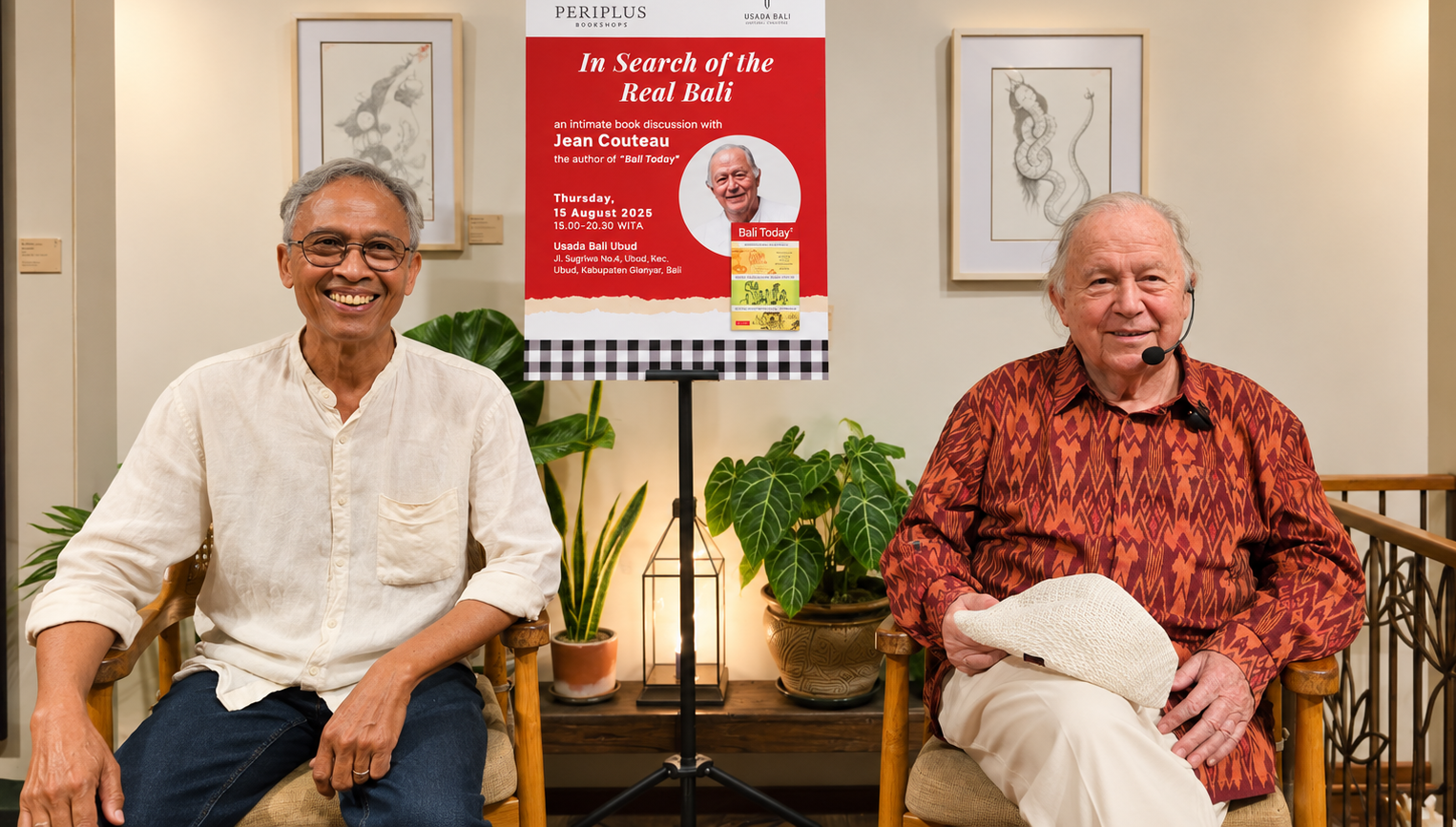
Jean Couteau with Ketut Yuliarsa at the book launch of Bali Today 13th August 2026 at Usada.
He wrote quickly, often producing an article for the newspaper at the last minute. Beside him was the artist Wayan Sadha, who would create cartoons and illustrations to accompany the stories. Couteau would then take his old red motorbike and travel around Denpasar, looking for stories. This was a very different Bali from the one we know today.
Couteau described a time when travelling around Bali on a motorbike and simply talking to people could open doors into worlds that were largely invisible to outsiders.
He stopped at roadside warungs, talked to people, observed everyday life and collected the small stories that revealed larger social realities. The warungs themselves became places of encounter, sometimes run by mothers with their daughters serving customers. From these apparently ordinary situations came stories about relationships, sex, class, tourism and the peculiar contradictions of Balinese and expatriate life.
The writing was often mischievous, sometimes provocative and occasionally deliberately naughty.
But beneath the humour was something more serious. Couteau was writing during a period when Indonesia was governed by a military-backed regime and open political criticism could carry consequences. English provided him with a degree of protection because relatively few people could understand what he was saying.
Satire became his way of speaking.
One of the most compelling themes of the evening was the relationship between criticism and humour in Balinese culture. Couteau pointed to the tradition of satire within Balinese performance, particularly the comic servants in wayang, who can criticise kings and powerful figures as long as the criticism comes through humour. He saw a connection between this tradition and the cartoons created by Wayan Sadha for the Bali Today series.
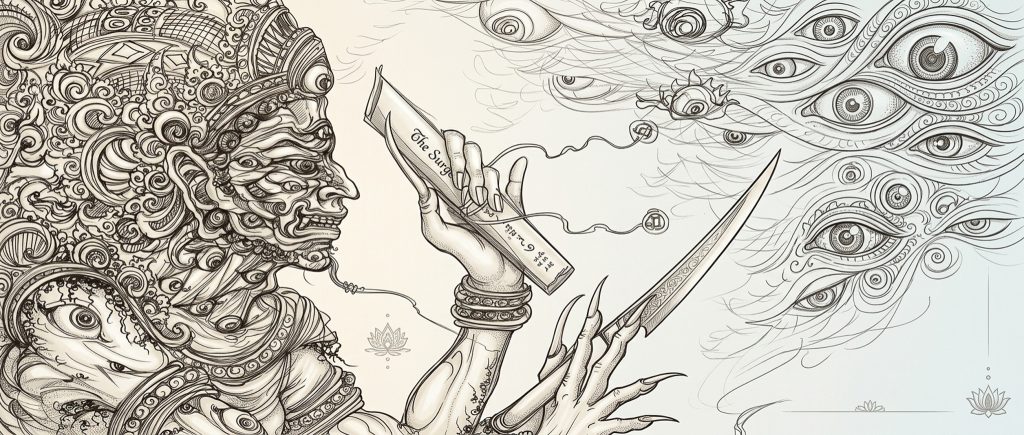
Sadha’s illustrations were crucial to the project. Rather than presenting Bali through the familiar imagery of beautiful dancers, temples and idyllic landscapes, they brought ordinary people and uncomfortable realities into view. They showed a Bali beneath the tourist image.
One cartoon, for example, depicted a Brahmin being asked to sweep a floor, touching on the sensitivities surrounding caste and social hierarchy. Other pieces explored tourism, sexuality, class and the sometimes awkward encounters between Balinese people and foreigners.
Not everyone appreciated the results.
Couteau deliberately worked at the boundaries of what could be published, and some stories and cartoons provoked strong reactions. Yet this was part of the purpose. The intention was not to create a polished portrait of Bali, but to capture the contradictions of a society in motion.
The title In Search of the “Real Bali” raises an obvious question: what does “real Bali” actually mean? For Couteau, the answer cannot be found in the romantic image of Bali as an earthly paradise. He spoke about the familiar idea of the Balinese smile, so often used in tourism to represent an uncomplicated happiness. But a smile can mean many things. So can hospitality, silence, ritual and politeness.
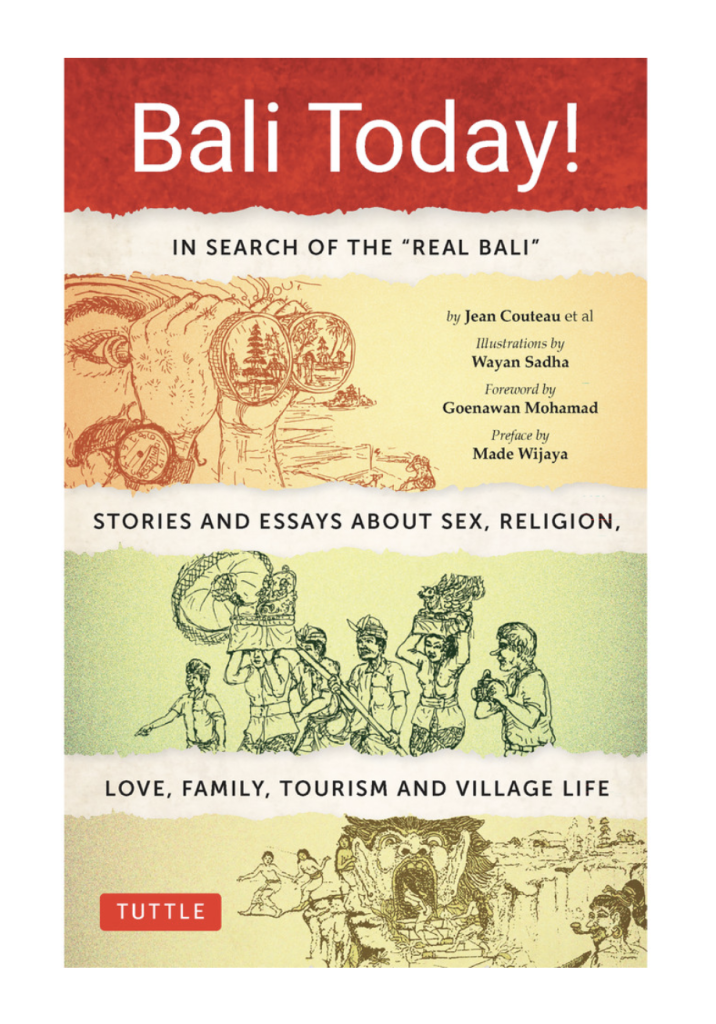
The Bali Couteau encountered was never one-dimensional. It contained beauty alongside absurdity, generosity alongside conflict, sophistication alongside social inequality. It was precisely these contradictions that interested him.He suggested that seeing only the positive aspects of a culture does not necessarily demonstrate love or respect for its people. Sometimes, he argued, showing contradictions and uncomfortable gaps can be a deeper form of respect.
This perspective has shaped much of his writing. Rather than positioning himself as an authority standing outside Balinese society, Couteau gradually became someone moving between worlds. His knowledge of Indonesian allowed him to enter conversations that might otherwise have remained closed to him. At the same time, his position as a foreigner gave him a different angle from which to observe what was happening around him.
That position was also discussed by fellow writers and collaborators from the original Bali Post circle. They remembered Couteau as an editor who brought together writers from different backgrounds and encouraged disagreement. The group included Balinese and Indonesian writers, foreigners and people from different social worlds. Their stories often contained competing voices, cynicism, sarcasm and contradiction. Rather than smoothing those differences away, they allowed them to remain part of the work.
This became one of the distinctive qualities of Bali Today. The book is not an anthropological study. It does not attempt to provide a definitive intellectual explanation of Balinese culture. Instead, it gathers short observations, stories and illustrations that record the texture of everyday life. In that sense, it functions almost like a series of snapshots.
The new edition adds more recent material, extending the original stories into the present and allowing readers to trace some of the enormous transformations Bali has undergone over the past forty years.The Bali Couteau explored on his red motorbike was still relatively small. Traffic was limited, tourism was developing rapidly but had not yet reached today’s scale, and the social and political landscape was very different.
Yet many of the questions remain surprisingly familiar. How does Bali negotiate the relationship between tradition and modernity? What happens when tourism changes communities? How do Balinese people respond to outsiders, and how do outsiders interpret Balinese life? Where does admiration end and romanticisation begin?
These questions give Bali Today its lasting relevance.
Perhaps the most important idea to emerge from the evening was that Couteau’s writing has never been primarily about establishing his difference from Bali. It has been about finding points of connection.
He spoke about his humanistic background in post-war Europe and his rejection of rigid ideas of identity. Rather than dwelling on cultural difference, he looks for similarities between people and societies. His humour, criticism and sometimes outrageous observations become tools for crossing the distance between cultures.
That may be why his work has resonated so strongly with Indonesian readers. He can be critical without pretending that he stands above the culture he observes. He can be affectionate without turning Bali into an imagined paradise. And he can be provocative while remaining attentive to the people behind the stories.
After forty years, that balance remains at the heart of Bali Today. The book offers no single definition of the “real Bali”. Instead, it reminds us that a place is made from thousands of ordinary encounters, disagreements, jokes, rituals, relationships and contradictions.
And perhaps that is the real Bali: not an image to be preserved, but a living culture that continues to change, argue with itself, laugh at itself and reinvent itself.
Article by Dian Dewi Reich.