Some artists preserve tradition through their work. Others help us understand how it continues to live, evolve and remain connected to community. In Learning to See with Ketut Budiana, we spend time with one of Bali’s most respected master artists, exploring his approach to art, ritual, memory and the importance of staying true to what we know. Several of his iconic works are on display at the Usada Shala, where his longstanding friendship with Usada founder Scott Bauer reflects a shared respect for Bali’s living traditions. Article By Dian Dewi Reich.
Ketut Budiana tells stories the way memory works when we stop trying to force it into shape.
In his seventies, some experiences return to him instantly; others wait behind a curtain. Our conversation drifts through artists, teachers, Barong, Rangda, trees, temples, and the errors that creep into written history when people describe things they never actually witnessed. It’s in what memory leaves behind, and what it chooses to keep, that its wisdom shows itself.
So we talk, and Pak Tut wanders across simple, profound observations.
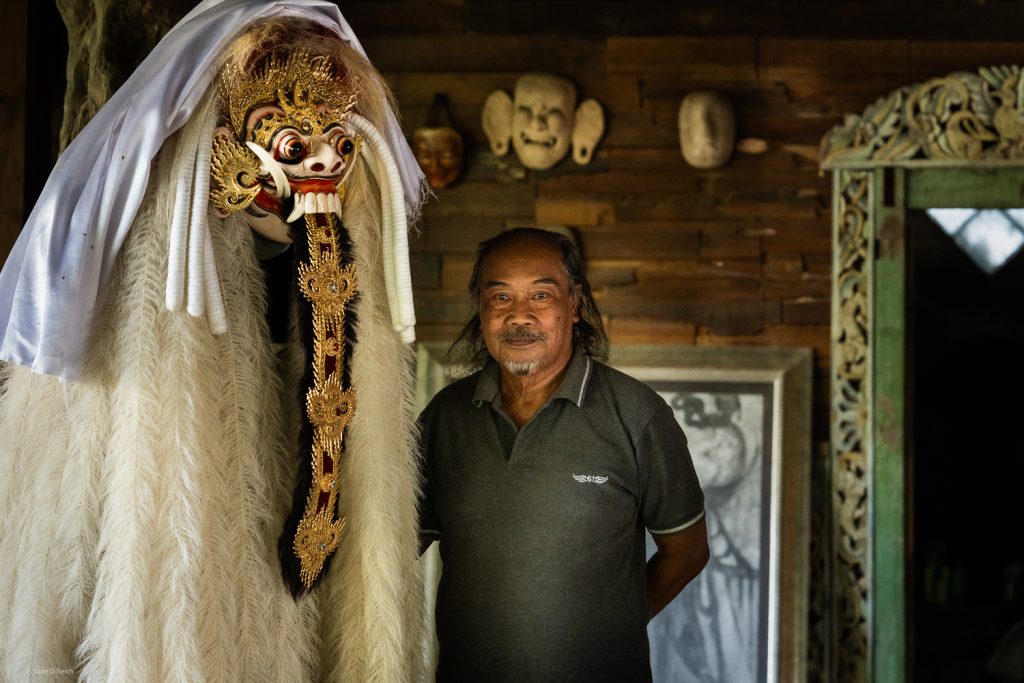
There’s a lot of ground to cover. His life as an artist crossed paths with several figures who shaped modern Balinese art, Walter Spies and Rudolf Bonnet among them. He doesn’t speak of them as distant art-history names: they were friends, teachers, people he knew.
He returns most often to Bonnet as a teacher. Bonnet’s background was in education, and Budiana believes that shaped his method. If a student wanted to draw a bird, Bonnet told them to look at a real one, not a picture.
Yet when several students did the same exercise, no two drawings matched. The bird stayed the same; each person saw it differently. It’s a lesson Budiana still carries: you can learn from others, be taught by them even, but eventually you have to see for yourself.
“We have to get to know ourselves,” he says. “We have to know others a bit, but then we have to know ourselves.”
He speaks of people who define themselves loudly, who make claims about who they are and who others are. It doesn’t seem to trouble him much. “Well okay,” he shrugs. “That is them, not I.”
Then, one of his plainer lines: “We have to have our own principles. If we go east, we go east.” Simple as it sounds, it carries the weight of everything he’s been circling. An artist can spend a lifetime surrounded by other artists, absorbing teachers and influences, but at some point comes the recognition of which direction is actually yours.
Budiana’s own education came through encounters like these. In the 1970s, he accompanied the master Gus Made Poleng while a Barong were repaired. Poleng sat outside and gave instructions; Budiana did the work.
There was no classroom here, little explanation even: just the work itself, and someone more experienced telling you what to do while you learned by doing it. At one point, Poleng refused to touch the Barong himself and asked Budiana to do it instead. He tells it plainly, but you can sense how deeply those years still sit with him.
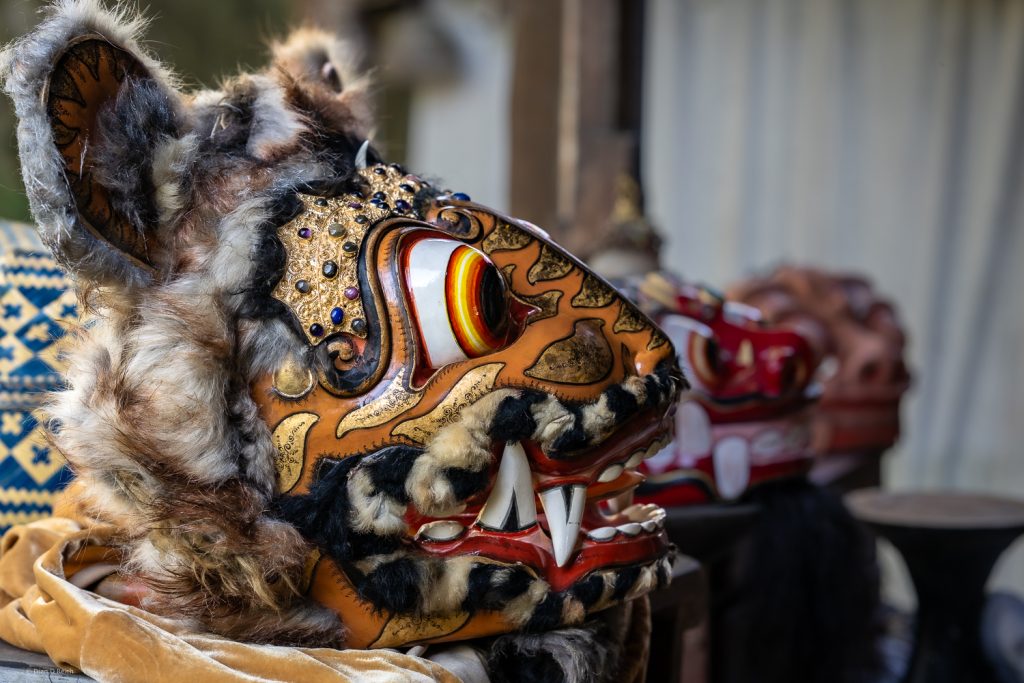
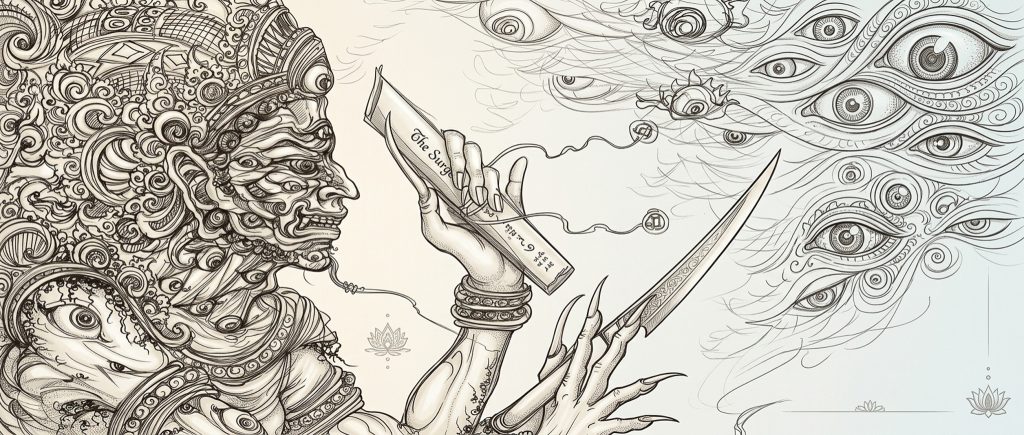
The same instinct, knowing a thing apart from what it’s assumed to be, rather than taking someone else’s word for it, carries over when the conversation turns to Rangda. Here Budiana is careful. He resists the idea, common in casual retellings, that Rangda and Durga are the same figure. Rangda, he explains, is Janda from Dirah, the widow. Durga is something larger, more universal.
“Durga is beautiful,” he says. “The power is Durga.” He talks about the energy held in these forms, and how the intention behind a piece, the vision for what it’s made to do, should shape how it takes form.
In Bali, Rangda embodies an intensely powerful energy. In the story of Calonarang, that force turns destructive, tied to suffering and pain. But Budiana also describes what happens when that same energy is returned to the temple through a ritual. What was harmful can become beneficial again. Meaning isn’t fixed to the object: it shifts with context, placement and purpose. A Rangda mistaken for a Durga, or reduced to a costume rather than a vessel, has been misread in the same way a person is misread when someone else’s claims about them are taken as fact.
He returns to the temple’s role in this. A powerful figure shouldn’t be lifted out of its setting and treated as a standalone object. Within the temple, it belongs to something larger than its physical shape. The vision determines the form, which is part of why the line between Rangda and Durga matters so much to him. Their imagery can blur in performance and storytelling, but their meanings don’t.
It’s this same attentiveness, looking closely enough to see a thing for what it is, that runs through a story he tells almost in passing. Twenty years ago he carved a Barong Macan for Pura Penataran Rinjani in Lombok. Around the same time he was finishing that piece, he was also completing a Rangda, cut from a fallen Pule tree in Sayan and begun by a priest from Batubulan. A call came in asking him to repair an old Barong, and it turned out to be the very one he’d made two decades earlier, returning to Bali for repair at almost the same moment the new Rangda was ready to leave. One work coming home after years away; another about to go out into the world for the first time.
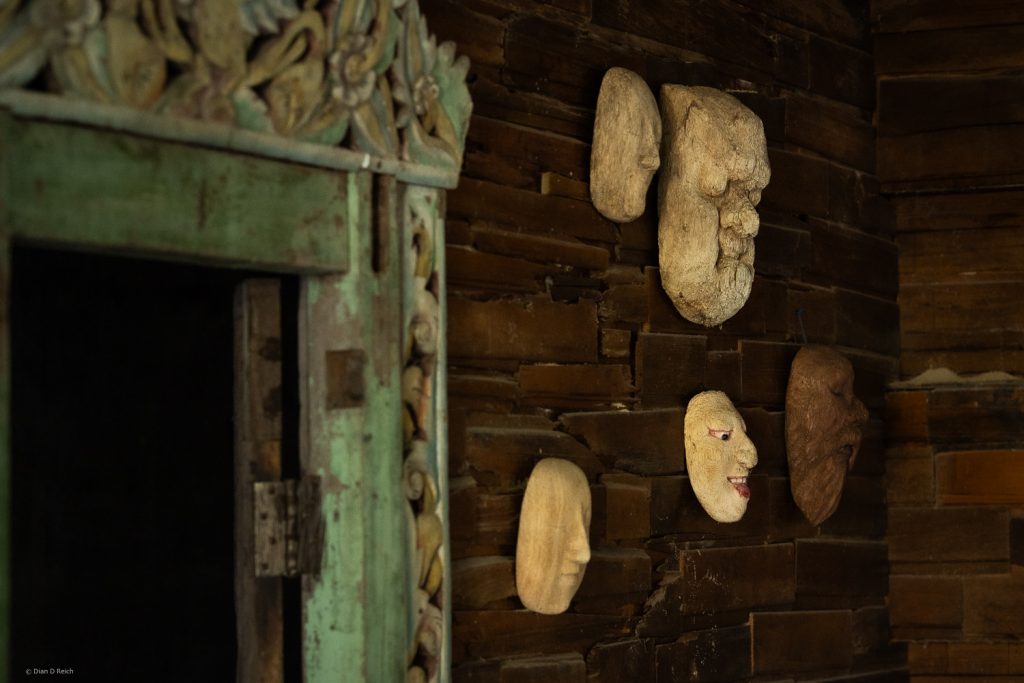
Budiana tells it without making a story of it: for him, it’s simply how these things unfold. Works travel, return, get repaired, get used, and are given new life within the communities that made them. Nothing stays fixed for long: not a Barong’s location, not a Rangda’s meaning, not, perhaps, a person’s understanding of their own path.
Which brings us back to where we started. Budiana has spent decades learning from others: Spies, Bonnet, Poleng sitting outside giving instructions, works he made decades ago finding their way back to him. Yet he’s equally clear that knowing others only takes you so far.
“We have to get to know ourselves.”
There’s a lot for an artist to absorb. Such as their teachers, peers and places. But somewhere in it, there has to be a moment of recognizing what belongs to you and what doesn’t.
“That is them, not I.”
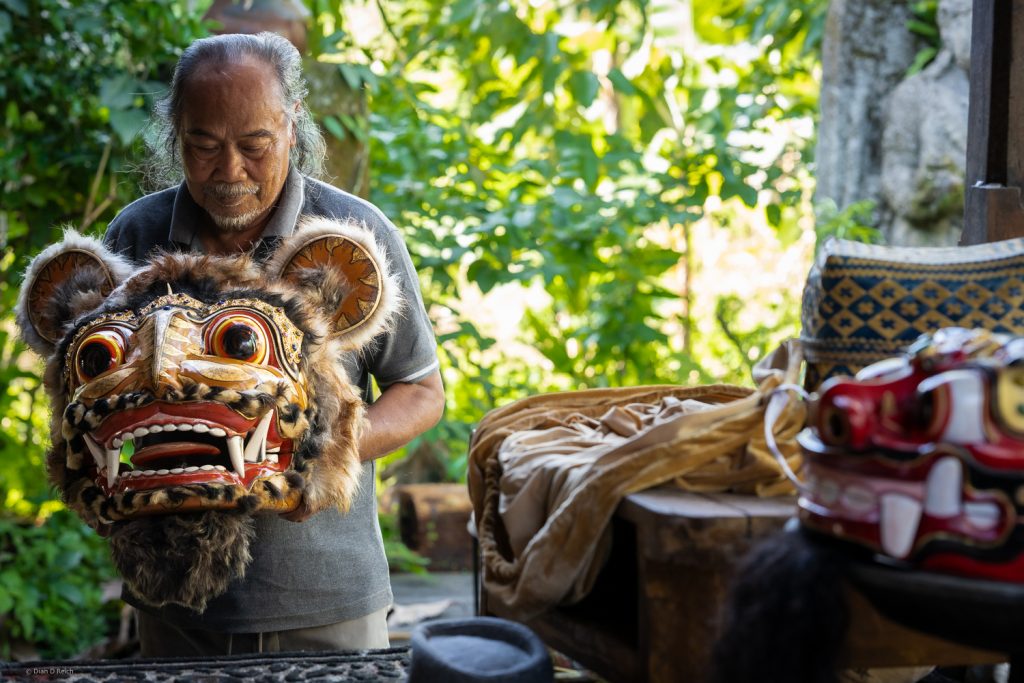
Budiana says he’s forgotten a great deal. Sometimes a name brings a memory back; sometimes it’s a piece of work that opens the door. Perhaps that’s what’s left after a lifetime of making things. Not every detail survives, but the work keeps carrying its history, and the hands go on knowing things words have started to forget.
To learn from someone isn’t necessarily to become like them. Maybe it’s learning how to look, how to listen, and eventually, how to see for yourself.
If we go east, we go east.
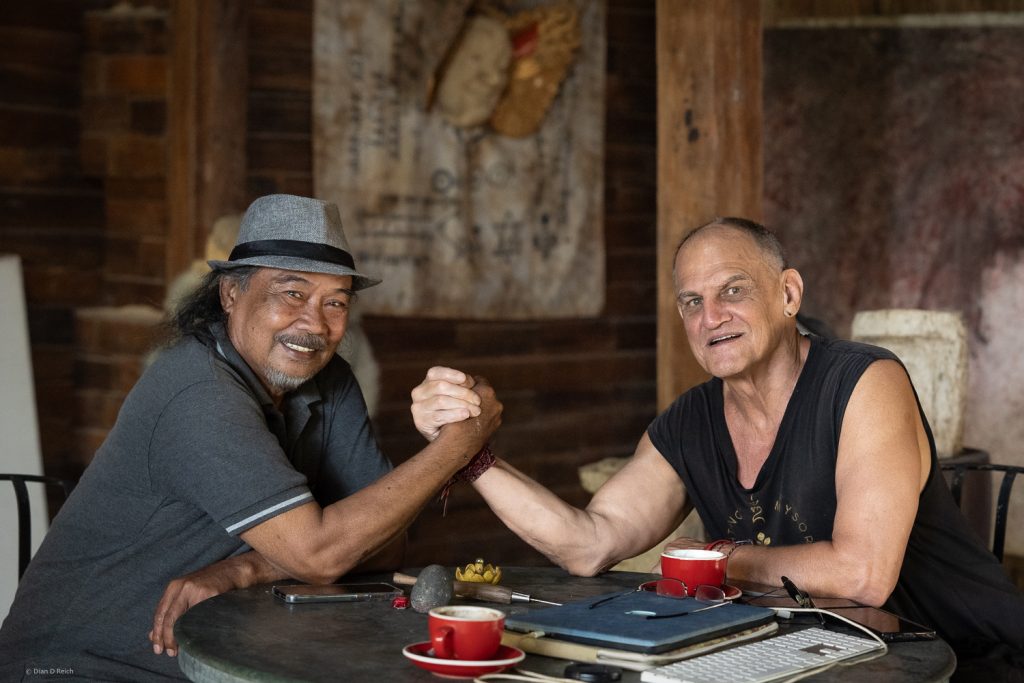
Ketut Budiana’s mastery extends beyond the artworks he creates to the knowledge, relationships and traditions he carries forward. Several of his iconic works are on display at the Usada Shala, reflecting a shared respect for Bali’s living cultural heritage.
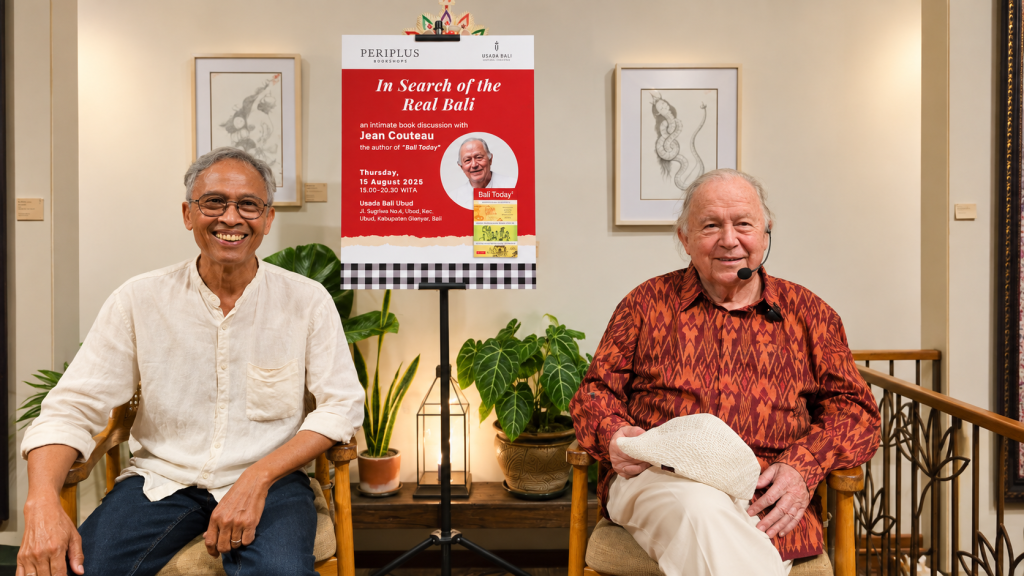
This photograph with Scott Bauer, founder of Usada, speaks to a longstanding friendship grounded in trust, integrity and a commitment to preserving the true traditions of Bali. Through their work and relationship, that continuity remains alive.