Yayasan Bhakti Senang Hati. For more than two decades, Yayasan Bhakti Senang Hati has done something Bali’s social infrastructure has rarely made easy. It helps people with disabilities become fully independent: employed, married, running businesses, raising families of their own.
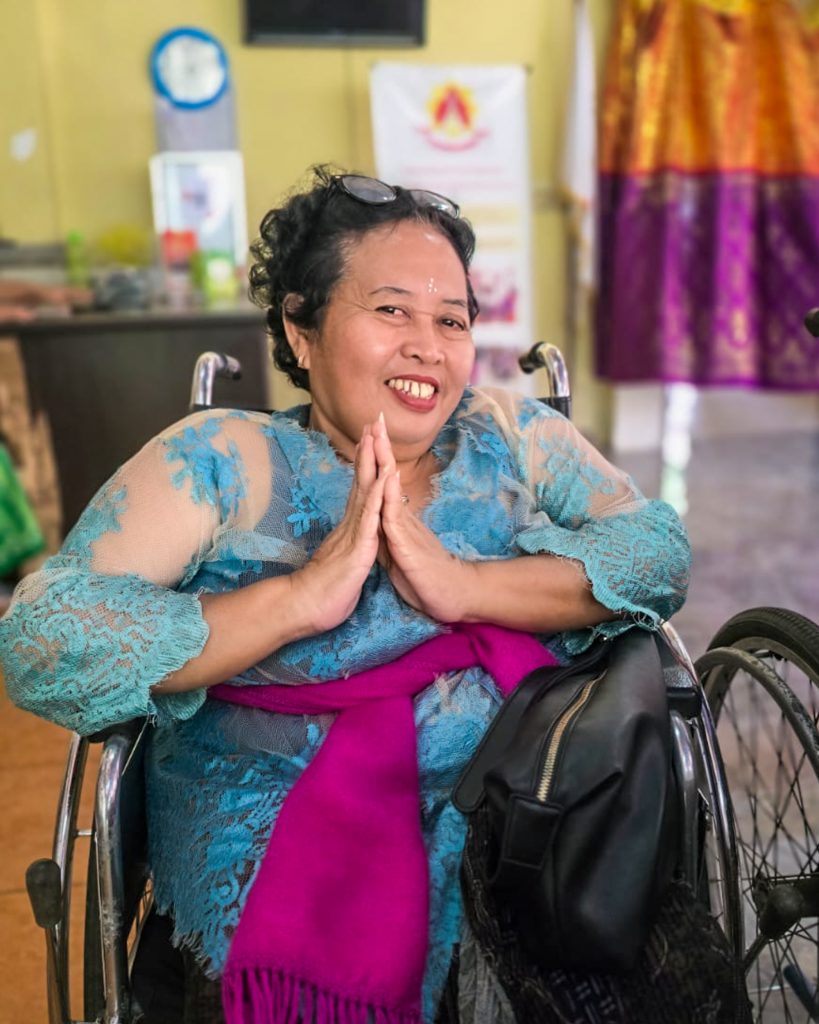
The foundation traces its roots to May 5, 2003, when Ibu Putu Suriati began working informally with people with disabilities, penyandang disabilitas, in the community. What started without legal standing or government backing grew steadily over the following decade. By 2013, close to 300 people had passed through the program. Many went on to build independent lives, taking jobs across different industries, starting businesses, and forming families of their own.
On September 19, 2014, that decade of informal work became official. Yayasan Bhakti Senang Hati was formally established, with 130 members forming its founding community.
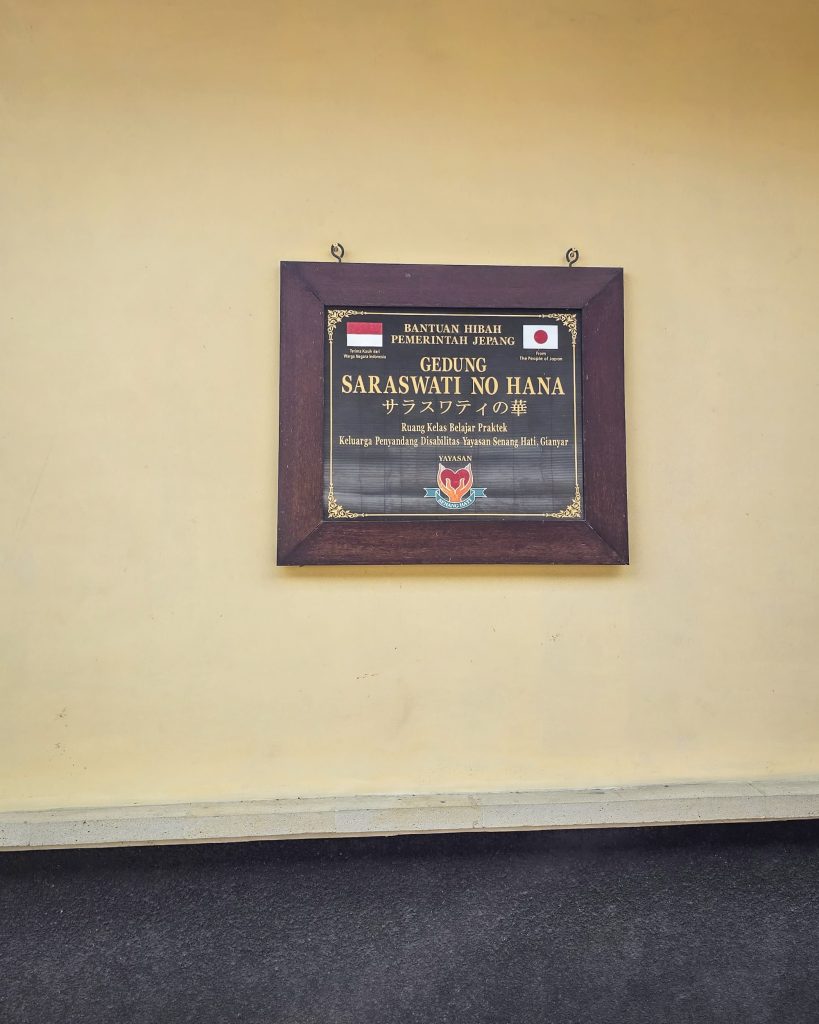
Today, the yayasan works with people with disabilities aged 14 to 50, spanning a wide range of conditions: physical disabilities, hearing impairment (tuna rungu), and mental or learning conditions. Space is limited. The foundation’s facility has eight rooms, enough to house up to 20 residents full-time. Its total membership of around 130 also includes members who attend as day students or for specific courses without living on-site.
For residents with more severe needs, the foundation provides additional support. Not everyone arrives ready for the same pace of independence, and staff plan for that.
Life at the yayasan runs on routine. Residents rise early and handle group chores and light exercise themselves, without staff assistance. Staff designed this deliberately, to build the muscle of self-sufficiency from the first hour of the day. Mornings bring non-formal education: literacy, English language classes, and vocational training in painting, sewing, music, and handicrafts. Afternoons bring more specialized instruction: vocal training, further craft work, and career counseling geared toward specific trades.
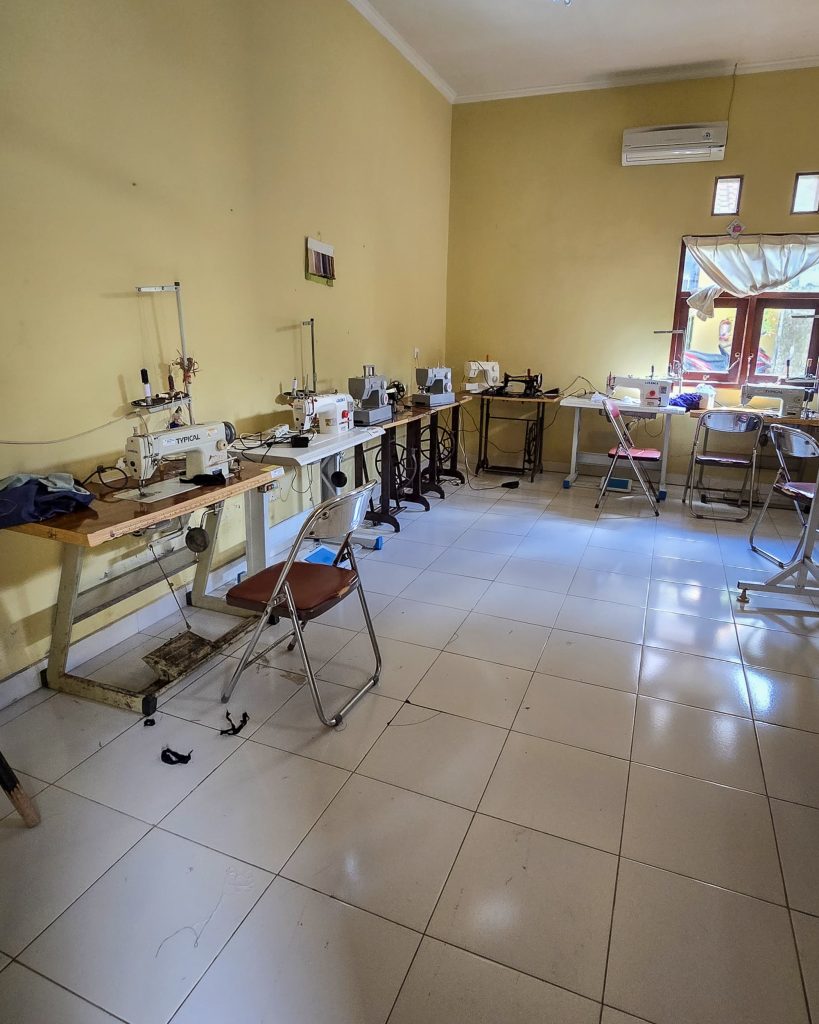
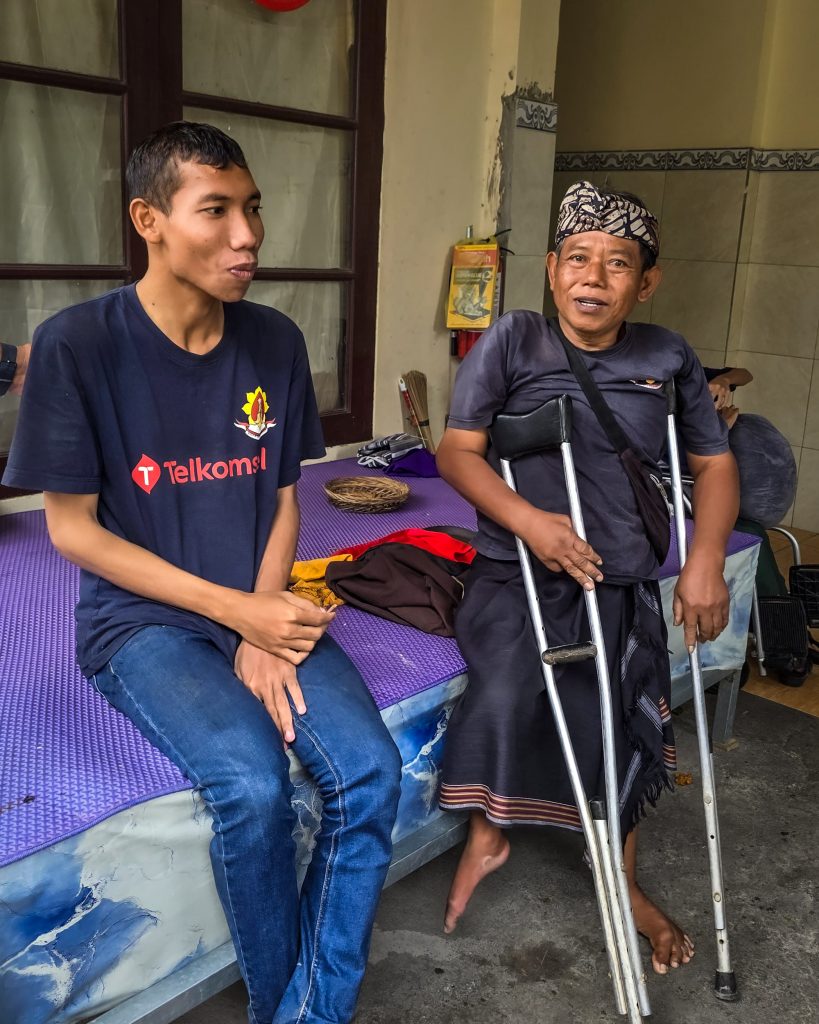
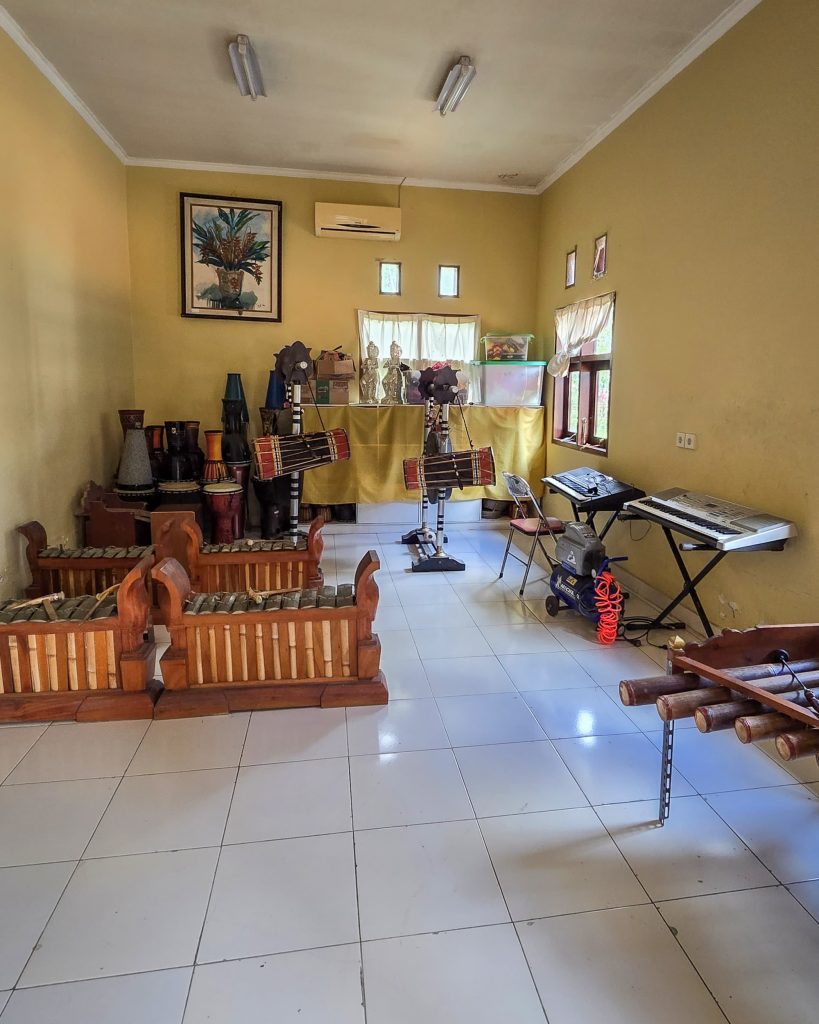
The program functions less like a holding pattern and more like a pipeline. Staff train residents toward real vocational outcomes; some go on to open their own small businesses, such as hair salons, after developing their skills on-site. Others move into Bali’s hospitality industry, one of the province’s largest employers, where the foundation has worked to place trained residents in real jobs.
The foundation also runs its own restaurant, staffed and supplied in part by its members, selling the products of their training. It receives no government funding, a point the foundation is candid about, so this self-generated income has become essential to keeping its programs running.
The foundation’s outcomes show up in individual stories. Gusman, once a resident himself, went through the training program and has since stayed on to help train others: a small but telling sign of the program’s design, where independence often loops back into mentorship. Elsewhere, one child under the foundation’s care now attends a mainstream state school, a marker of the kind of inclusion the yayasan hopes to see more of across Bali.
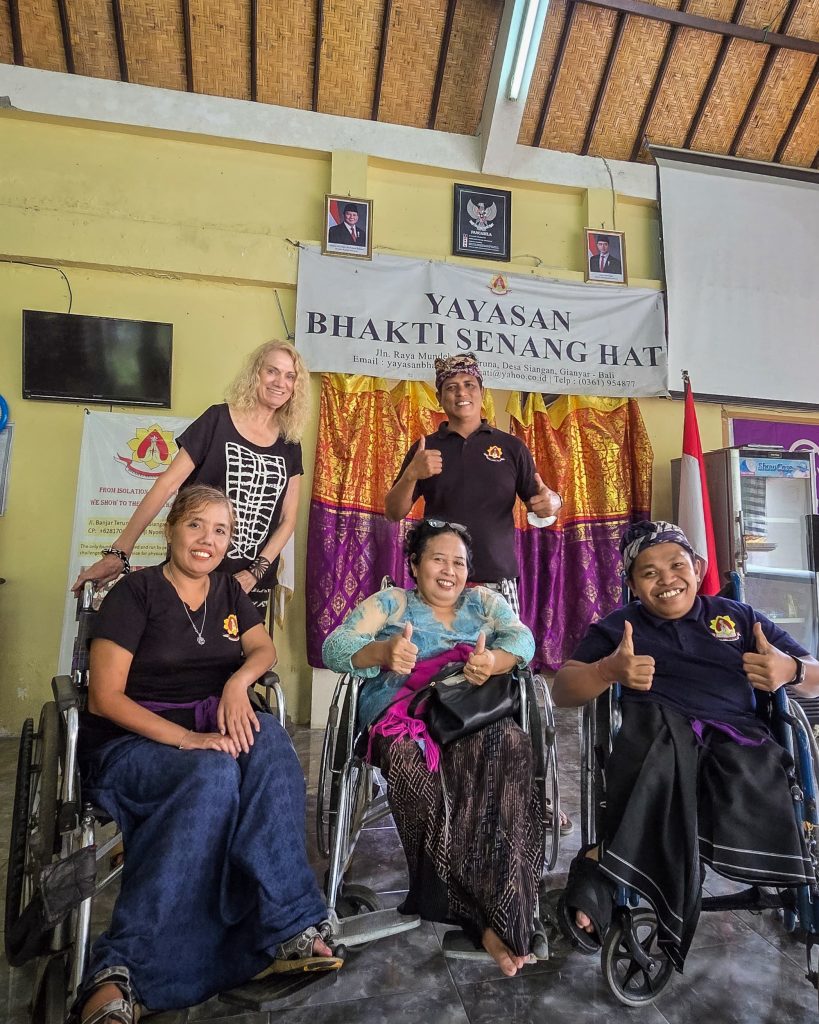
Inside Yayasan Bhakti Senang Hati the Residents typically spend around three years in the dorms before transitioning back into the wider community to put their training into practice. When a resident isn’t yet ready, and independence might mean regression rather than progress, the foundation extends its support rather than releasing someone before they’re prepared.
Ibu Putu Suryati and the foundation’s staff stay clear-eyed about the environment they work in. Bali’s schools and public institutions, they say, often lack the basic equipment and support structures needed to include people with disabilities as a matter of course. That leaves foundations like Yayasan Bhakti Senang Hati to fill a gap they believe standard public provision should be meeting.
The foundation has spent 23 years trying to close that gap, one resident at a time. It stands as quiet proof of what’s possible when a community decides independence isn’t optional, but the goal.
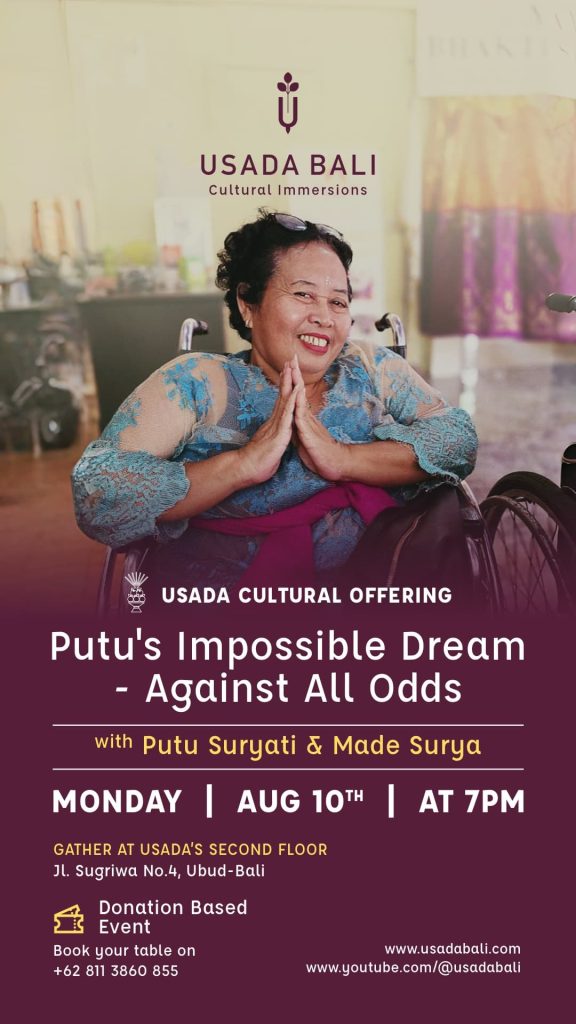
Ibu Putu Suryati has led that effort since the beginning, and the foundation’s growth over the years owes much to supporters like Made Suryasa and his wife Judy Slattum, who have championed its work within Bali’s wider cultural community. Ibu Putu will speak further about the foundation’s mission at a talk on Monday, August 10th.
For related articleson Made Suryasa’s discussions on Balinese culture and community, click here.