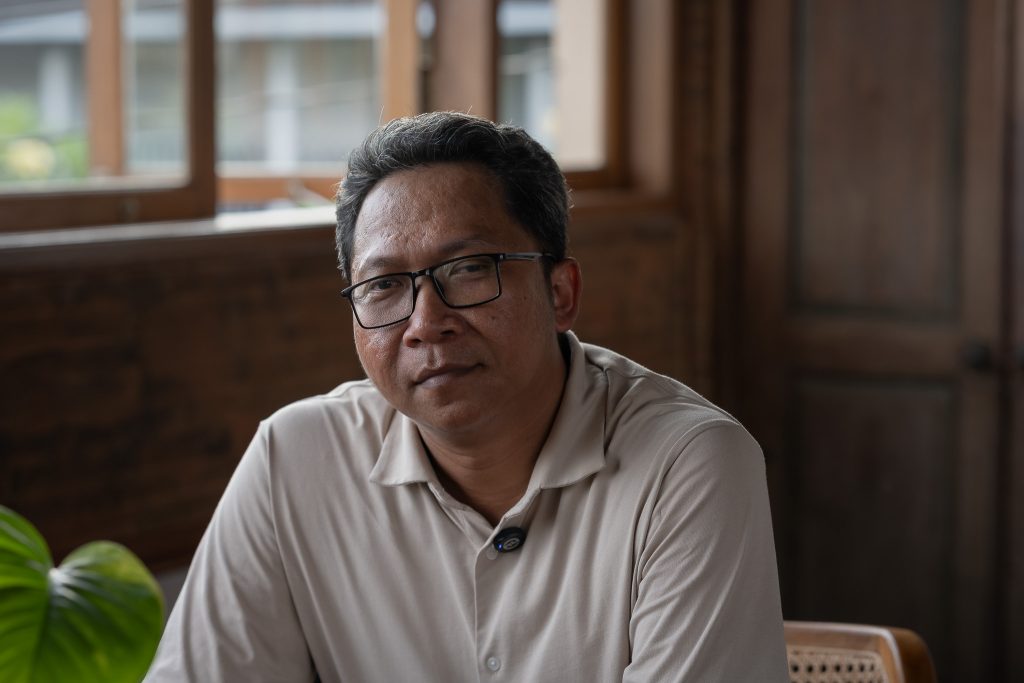
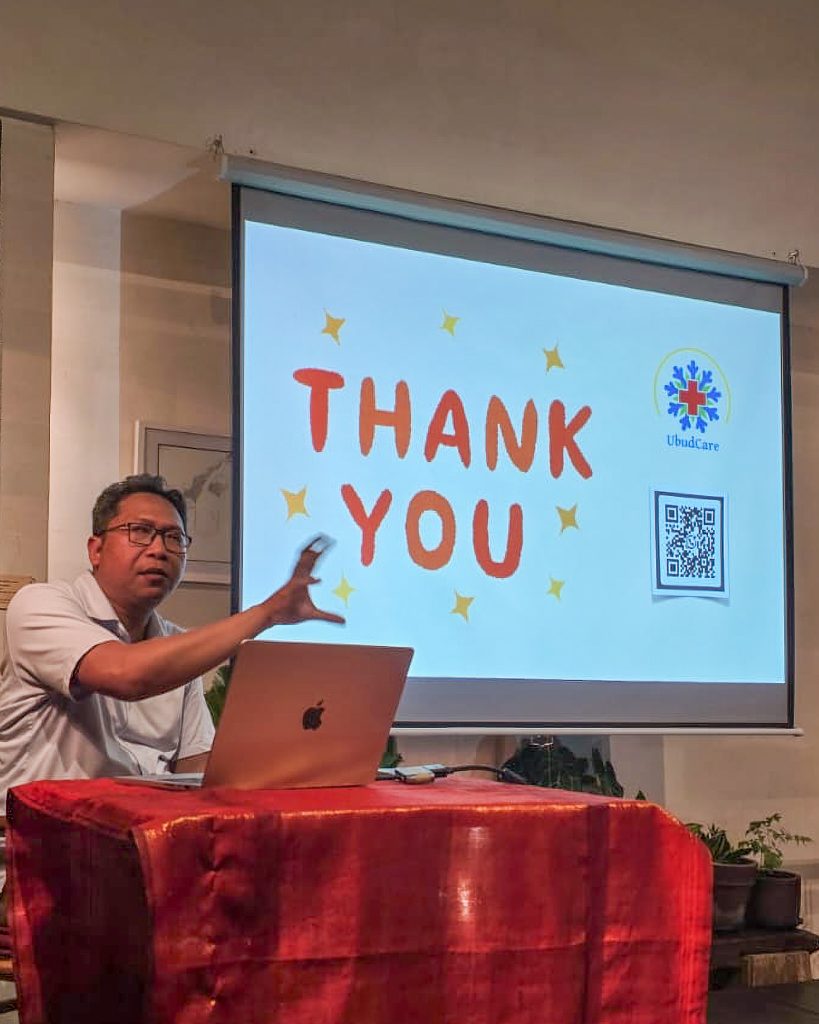
This article documents Dr. Krisnawan presentation, Beyond Coping: Building the Capacity to Thrive, delivered at Usada Bali. It is an editorial interpretation of the presentation and is intended to share its key themes and insights with readers who were unable to attend.
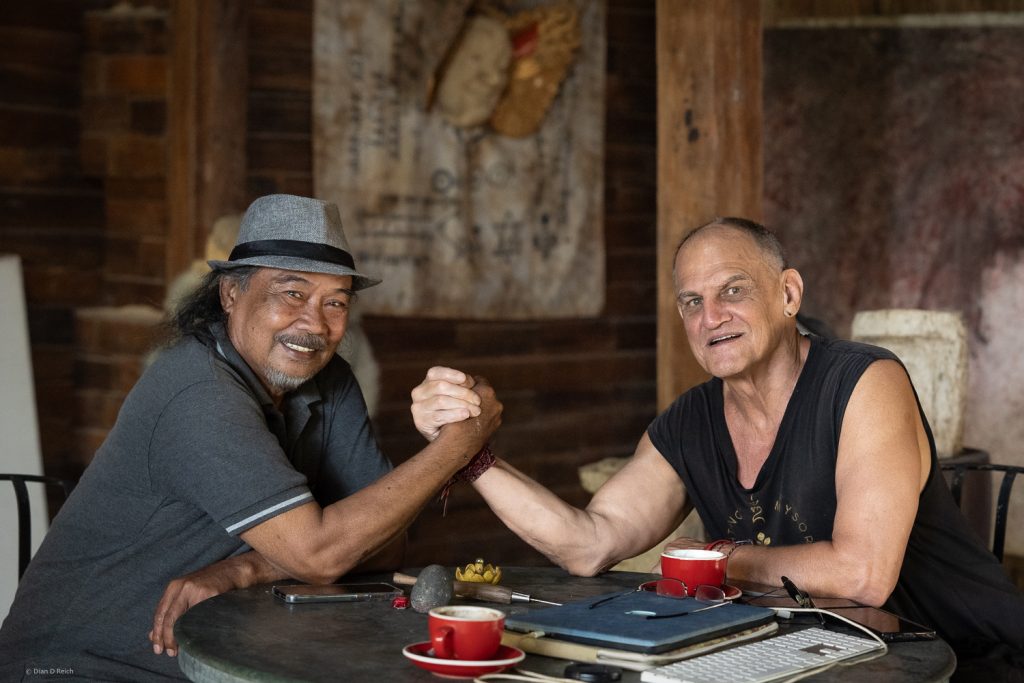
Dr. Krisnawan. Co-Founder of UbudCare Wellness, General Practitioner and Pranic Healing Practitioner and Instructor. Dr.Krisna shares his knowledge and experience through talks and workshops at Usada, Bali.
There is no shortage of advice on how to cope.
We are encouraged to slow down, take a break, breathe deeply, exercise, meditate and seek support when life becomes overwhelming. These are all valuable practices, yet they tend to focus on one immediate goal, getting us through the present moment. But what happens after the crisis has passed?
What prepares us for the next setback, the next loss, the next unexpected turn in life?
These were the questions explored by Dr. Krisna during his recent presentation at Usada Bali, Beyond Coping: How to Build Resilience to Thrive Despite Life’s Challenges. Drawing from both medicine and Pranic Healing, he invited the audience to look beyond temporary relief and towards something more enduring, resilience.
One of the simplest ideas shared throughout the evening was also one of the most profound. Resilience is not a personality trait reserved for naturally optimistic people. Nor is it something we either possess or lack. It is a skill. Like riding a bicycle, resilience is learned through practice. We fall, regain our balance, adapt, and slowly become more capable each time life asks something difficult of us.
The distinction between coping and resilience became the thread that held the evening together.
Coping helps us survive today’s challenge. It eases the immediate pressure and allows us to keep functioning. Resilience, however, is what develops over time through repeated recovery and adaptation. It is the quiet strengthening that happens each time we move through adversity without allowing it to define us.
Rather than asking, How do I escape this problem?, resilience asks a different question, ‘What is this experience asking me to develop?‘ It is a subtle shift in perspective, but one that changes the way we meet difficulty altogether.
Dr. Krisna reminded the audience that coping is not the destination. It is an essential first step, but resilience is what allows us to emerge from difficulty with greater wisdom, confidence and capacity than before.
Much of this begins with understanding stress itself. Dr. Krisna observed that stress is often misunderstood. Many people associate it only with major emotional crises, yet stress exists whenever the demands placed upon us outweigh our current capacity to respond. In that sense, stress is neither good nor bad. It is simply a measure of tension.
Healthy stress has an important purpose. It sharpens our focus before an examination, motivates us to prepare for an important presentation and encourages us to grow beyond what feels comfortable. Without some degree of challenge, learning rarely takes place.
The problem arises when stress never subsides.
The body is remarkably equipped to respond to danger. Through the sympathetic nervous system, hormones such as adrenaline and cortisol prepare us to fight, flee or freeze. Our breathing changes, our muscles become alert and blood flow is redirected towards immediate survival. It is an extraordinary system, but one designed for moments of crisis, not for living in a constant state of vigilance.
When the body remains there for weeks, months or even years, the consequences begin to appear elsewhere. Sleep becomes disturbed. Digestion suffers. Concentration declines. Fatigue becomes familiar. Emotional resilience slowly erodes. Understanding how stress affects us is the first step towards understanding why resilience matters.
If stress affects every aspect of our lives, then resilience must also be built in every aspect of ourselves. It cannot exist solely in the mind. Throughout the evening, Dr. Krisna described resilience as something supported by the body, our emotions, our thoughts, our energy and our broader spiritual perspective. These dimensions are inseparable. Neglect one for long enough and the others inevitably begin to feel the strain.
It is perhaps why caring for ourselves is so often misunderstood. Self-care has become associated with comfort or indulgence, when in reality it is preparation. Looking after the body through movement, nutrition and rest is not separate from emotional resilience. Neither is learning to calm the mind, cultivate healthy relationships or create moments of stillness throughout the day. These are not luxuries reserved for easier times. They are the very practices that increase our capacity to meet difficult ones.
One of the strengths of Dr. Krisna’s presentation was the way he moved effortlessly between medical science and energetic understanding without placing them in opposition. Modern medicine helps us understand how chronic stress changes our physiology. Energy practices offer another lens through which we can appreciate how prolonged emotional and mental strain influences our overall wellbeing. Together they describe different aspects of the same human experience.
Rather than choosing one perspective over another, resilience emerges when we learn to care for the whole person.
Perhaps the most reassuring message of the evening was that resilience does not require extraordinary circumstances. It is built quietly. Through recovering instead of giving up and adapting instead of resisting every change.

When we recognise that setbacks are not interruptions to life but part of life itself. Every challenge becomes another opportunity to strengthen the qualities that allow us to meet the next one with greater wisdom. There are times when coping is enough. Some days simply getting through is an achievement in itself.
But eventually there comes a point when survival is no longer the goal. The invitation is to move beyond coping, to build a life supported by habits that cultivate health, resilience and inner stability long before the next storm arrives. Because thriving is not the absence of difficulty.
It is the capacity to continue growing despite it.
Continue reading the series of integrated wellness with Dr.Krisnawan at Usada.