Reflections on Balinese ancestral traditions from a talk by Jean Couteau at Usada
Editor’s Note
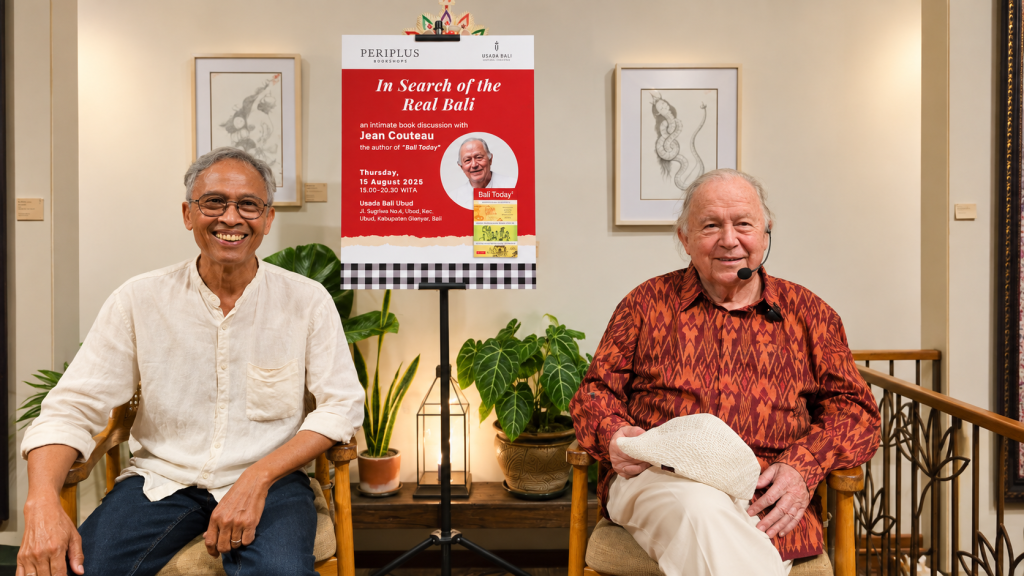
Kuningan: Ancestors and a Sacred Cycle article is based on a talk by Jean Couteau presented at Usada, exploring the cultural and spiritual dimensions of Galungan and Kuningan in Bali.
Couteau’s reflections draw attention to the importance of ancestral relationships, ritual cycles, and the ways Balinese communities understand connections between humans, nature, the divine and the unseen world.
The interpretation presented here reflects one perspective within the wider and diverse landscape of Balinese religious and cultural traditions. Balinese Hindu practice has developed through many layers of history, including indigenous traditions, local village customs, and influences from Indian religious and philosophical traditions.
Rather than offering a single definition of Balinese belief, this article invites reflection on the meanings carried through ceremony, family lineage and the continuing relationship between generations. If Galungan marks the arrival of the ancestors and the renewal of the relationship between generations, Kuningan represents the completion of this sacred visit.
The ten-day period between Galungan and Kuningan is a time when Balinese families honour the presence of their ancestors, who are believed to return to their descendants. These days are not simply a remembrance of those who have passed away, but an active relationship — a time of welcoming, caring for, and communicating with ancestral spirits.
According to Jean Couteau, this reflects one of the deepest layers of Balinese ritual life: the understanding that the living and the ancestors remain connected.
In the Balinese family compound, the merajan or sanggah (family temple) is the centre of this relationship. The ancestral shrine, particularly the Rong Telu, is traditionally understood as a place where ancestral presence resides. During Galungan, ancestors are invited to return to this sacred space.
Families prepare offerings, food and prayers. The ancestors are welcomed not as distant beings, but as part of the family lineage — respected elders who continue to have a relationship with those who came after them. This idea reveals a particular understanding of time. The past is not separated from the present. The generations are connected through ritual, memory and responsibility.
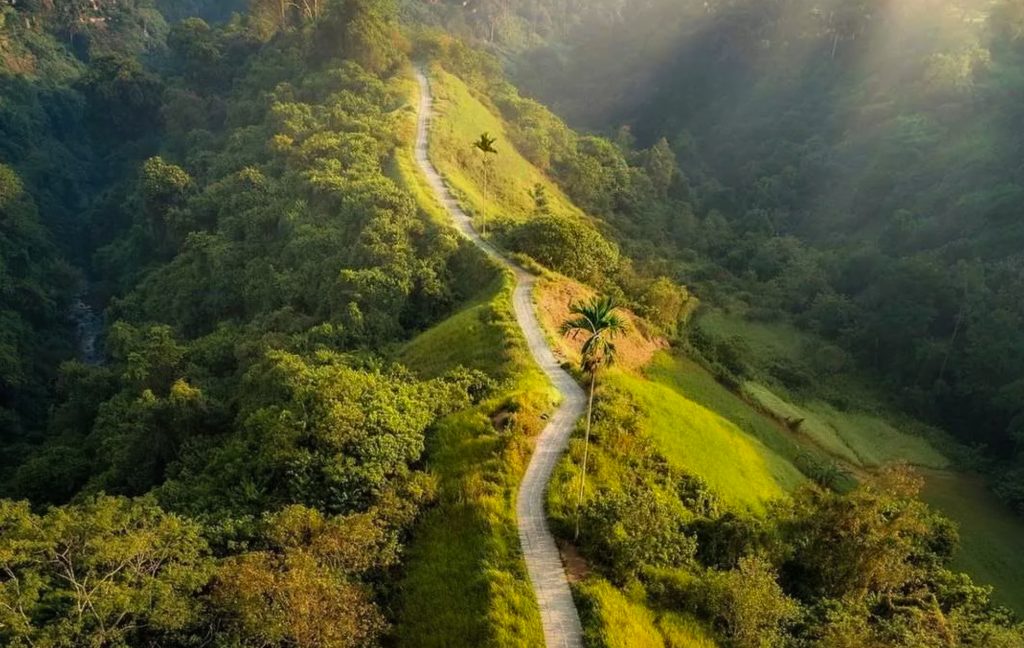
After their period of visiting their descendants, the ancestors return to their higher dwelling on Kuningan. The rituals of Kuningan are performed before midday, while the sun is still rising. Symbolically, this reflects the movement back toward the higher realms — toward the mountain, the place traditionally associated with sacred power and divine presence.
The ancestors return, but the relationship remains. Their visit has renewed the connection between family members, reminding descendants of their responsibilities and obligations.
One of the recurring themes in Balinese cosmology is the importance of water.
Water represents purification, life and transformation. At the end of the human journey, after cremation and purification rituals, the essence of the person is returned to a state associated with water. Water also carries sacred presence through temple ceremonies. When holy water (tirta) is brought from significant places and used in ritual.
This relationship between mountain and water appears throughout Balinese tradition. The mountain is the source of divine power and ancestral origins; the water carries purification and life back into the world.
The days surrounding Galungan and Kuningan also acknowledge the importance of maintaining balance with unseen forces.
Balinese rituals often include offerings to Bhuta Kala. The forces associated with the natural and unseen world. Not necessarily as evil forces, but as energies that must remain in harmony. The purpose of ritual is therefore not only devotion, but maintaining balance between different elements of existence. Humans, nature, ancestors and divine forces.
One of the most striking aspects of Balinese ancestral traditions is the absence of a strict separation between the spiritual and everyday worlds. The ancestors are not simply ideas or symbols. Within this tradition, they remain part of family life. They are remembered, honoured and included.
This relationship continues through ceremonies, offerings and obligations carried from one generation to the next. Kuningan therefore marks both an ending and a continuation. The ancestors return to their realm, but the bond remains alive. A reminder that identity in Bali is not only individual, but deeply connected to lineage, place and community.
The sacred cycle continues, waiting for the next Galungan, when the ancestors will once again be welcomed home.
This is part II of a pair of articles inspired by the talks of Jean Couteau at Usada Bali. To read part II, read Galungan and the Return of the Ancestors.