Beyond Borders is inspired by a presentation given by Dr. Kerstin Duell at Usada Bali in June 2026. It draws upon themes and stories shared during her talk. The reflections that follow are offered as a response to her work and the questions it continues to evoke. Article by Dian Dewi
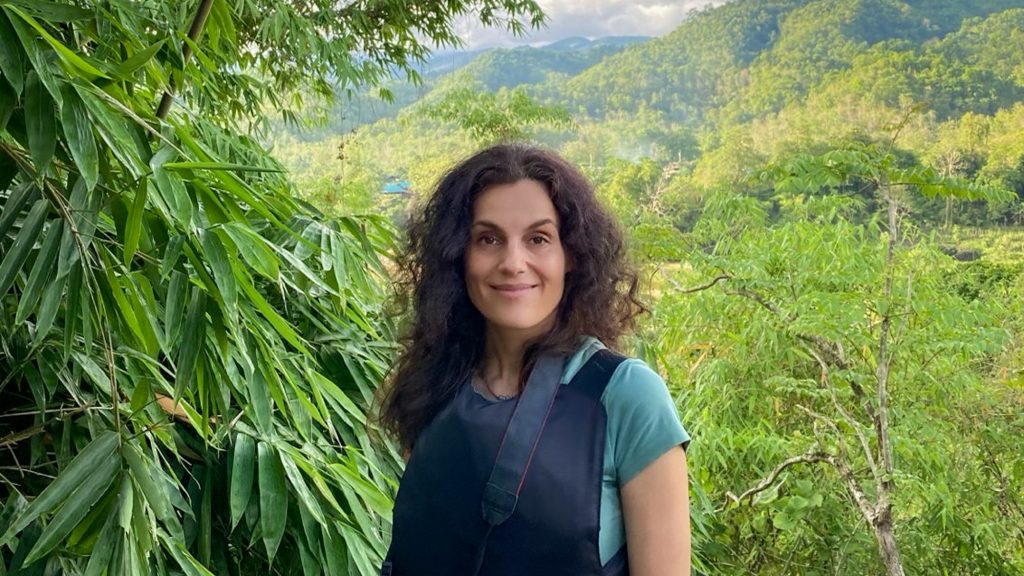
Every now and then we encounter someone whose life has been shaped by curiosity. Not curiosity in search of answers, but the quieter kind that begins by paying attention. That same quality seemed to run through every aspect of her work.
Our first conversation wandered between political science, Buddhism, yoga and Southeast Asia. At first, these seemed like separate worlds. She spoke of deliberately keeping her personal spiritual practice apart from her professional life, one grounded in contemplative traditions, the other in the realities of democratisation, migration, conflict and ethnic politics. Yet as the conversation unfolded, it became harder to see them as separate worlds.. Both appeared to begin from the same place: a genuine curiosity about people.
Kerstin never set out to become a professor. Her ambitions lay elsewhere. “I want to work in Burma in the field,” she explained. It was a simple statement, yet it revealed something essential. Academic research was never the destination. It became a way of entering communities, of listening before drawing conclusions, of allowing understanding to grow through presence rather than distance. Presence, patience and trust remain indispensable.
When Kerstin later spoke at Usada about women and leadership in Southeast Asia, the presentation drew upon decades of research into political movements, ethnic organisations and women who had assumed positions of leadership. Yet woven through these larger narratives was another story, one that seemed to emerge almost incidentally. Beneath the recognised leaders were countless ordinary women whose acts of care, responsibility and resilience quietly sustained the communities around them.
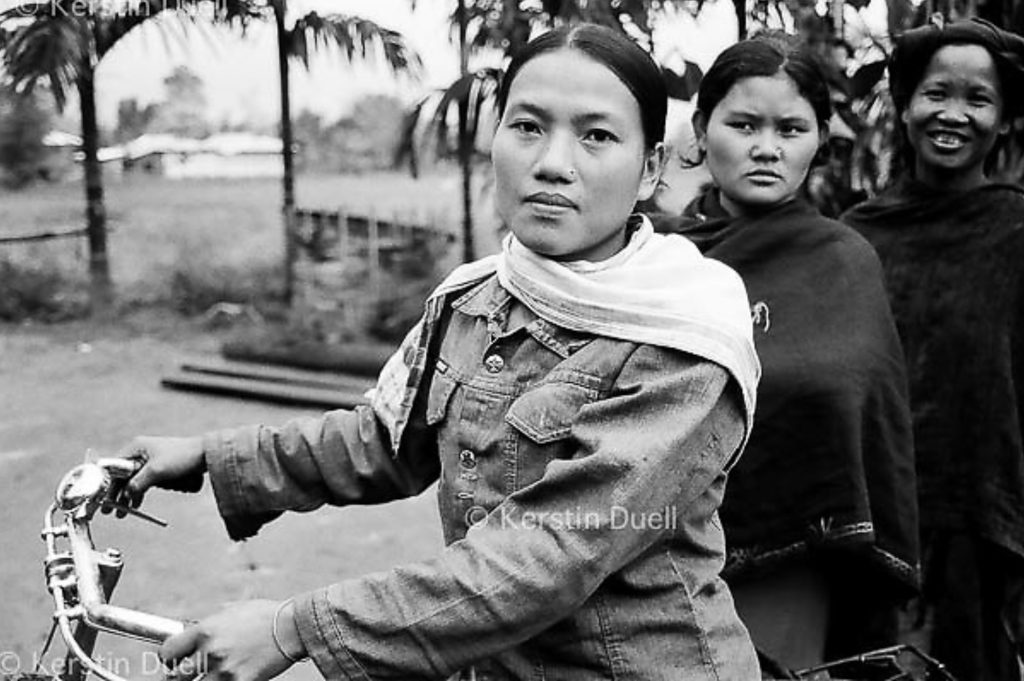
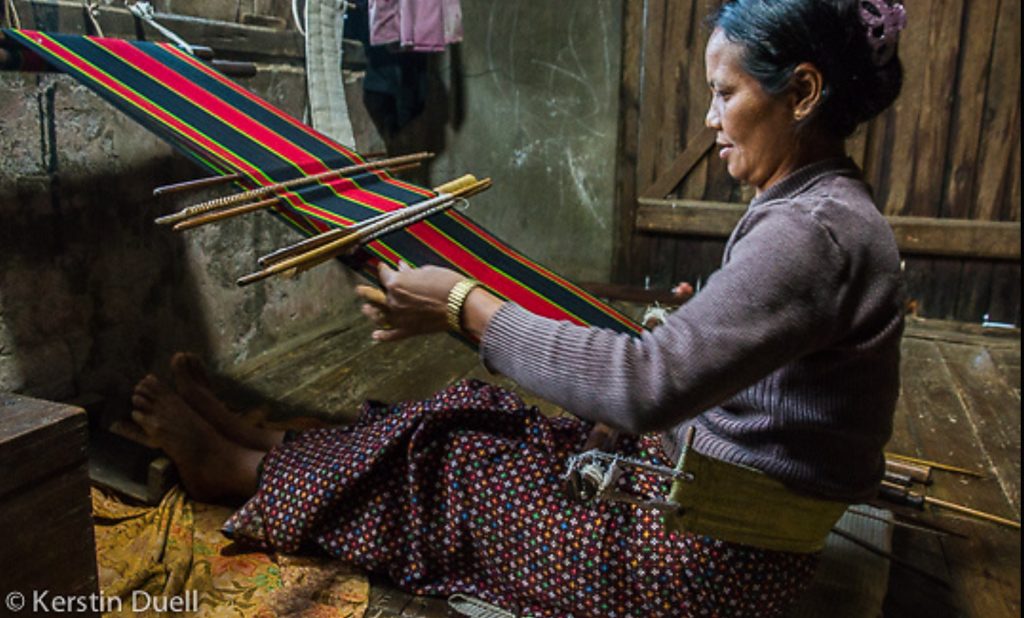
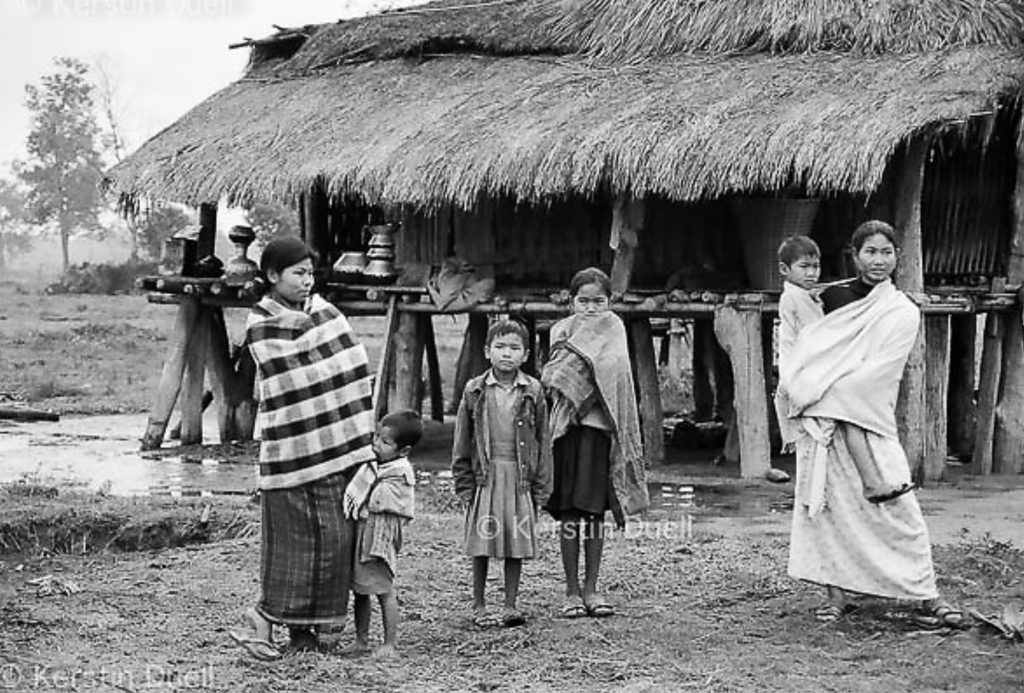
Again and again, the stories returned to people responding to one another. Young women, themselves living in poverty, travelled between isolated communities to warn others about the dangers of human trafficking. They earned little, yet still found the means to print leaflets and share information that might spare someone else from exploitation. Refugee communities built schools and places of worship from whatever materials they could gather. Skilled weavers preserved both a livelihood and a cultural tradition. Mothers raised children while documenting human rights abuses and contributing to political movements that, years later, would help shape the future of their country.
None of these accounts sought to inspire. They were shared almost matter-of-factly, as though this was simply what people did when circumstances demanded it.
While the presentation explored leadership in its political and social dimensions, the stories also suggested that leadership rarely begins with public recognition. Again and again, it appeared first in relationships, in everyday acts of responsibility and in the willingness to serve others long before anyone assumed a formal position of influence.
Leadership is often associated with public office, political influence or recognised authority. Yet the experiences Kerstin shared suggested something rather different. The forms of leadership rooted in responsibility and care often sustain communities long before they are recognised beyond them. History tends to remember those who eventually stand at the front. Less visible are the countless ordinary decisions that make those moments possible.
The settings of Kerstin’s work are frequently described as borderlands. Geographically, they occupy the edges of nations where political boundaries have shaped lives for generations. Borderlands are places where the familiar definitions of identity, belonging and nationhood are continually tested. The lines drawn on maps remain fixed, while the realities of everyday life rarely do.
Families cared for relatives across frontiers. Communities reorganised after displacement. Neighbours shared knowledge, food and resources. Even where political structures became fragile, human relationships remained remarkably resilient. That is what borderlands ultimately reveal. Boundaries may divide territory, but they rarely contain the fullness of human relationships.
Kerstin’s work quite naturally centres on women, and the experiences she shared offered an important insight into the ways women have carried communities through conflict, displacement and profound social change. Yet beneath each story lay something that reached beyond gender itself. Again and again emerged the same quiet qualities: responsibility, resilience, generosity and care. They are often overlooked because they rarely seek attention, yet they are among the very things that allow communities to endure.
The stories were unmistakably about women, yet they also revealed qualities that feel universal. The circumstances may differ across cultures and histories, but the capacity to care for others, to shoulder responsibility and to quietly sustain a community is something recognisable far beyond the places where these stories unfolded.
Interwoven throughout the presentation was a remarkable collection of photographs documenting years spent working alongside communities across Myanmar and Southeast Asia. More than illustrations, the images reflected the same attentiveness that has shaped Kerstin’s work as both researcher and photographer.
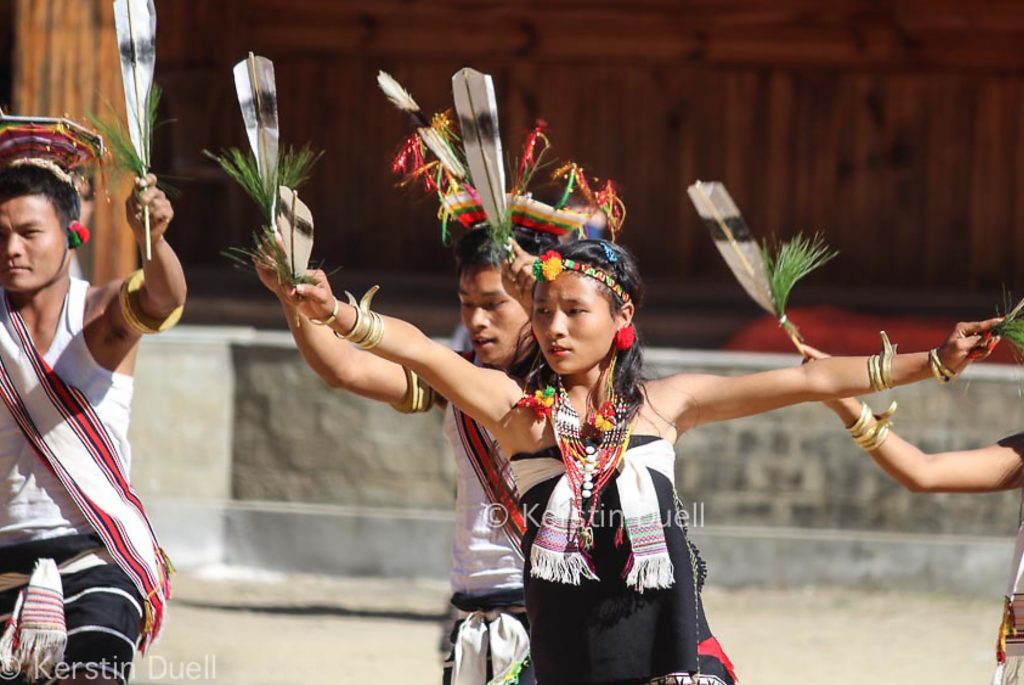
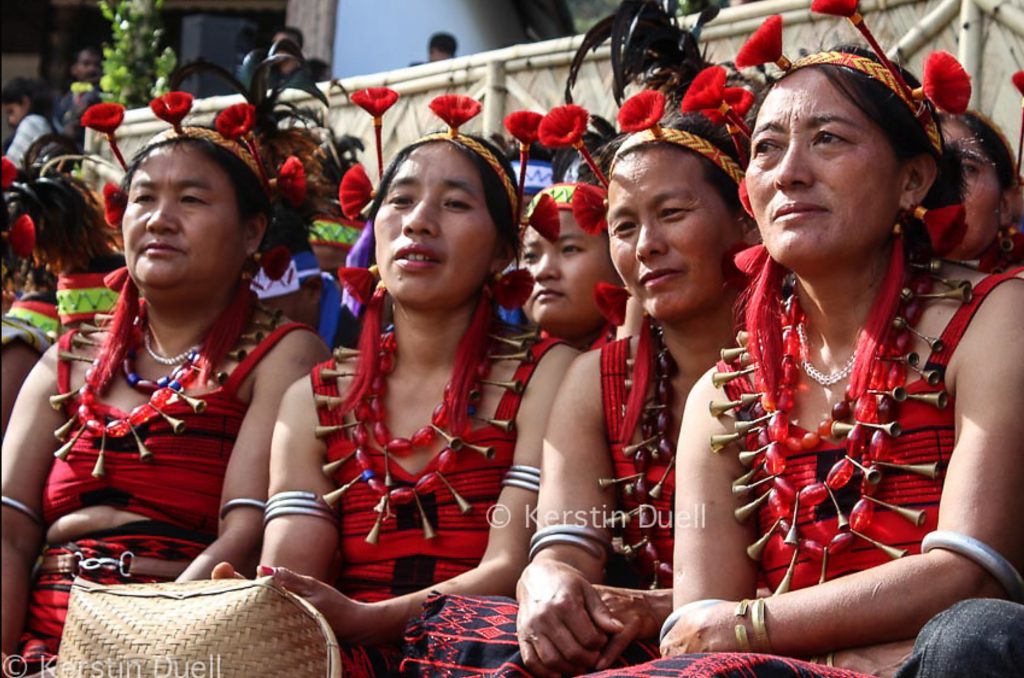
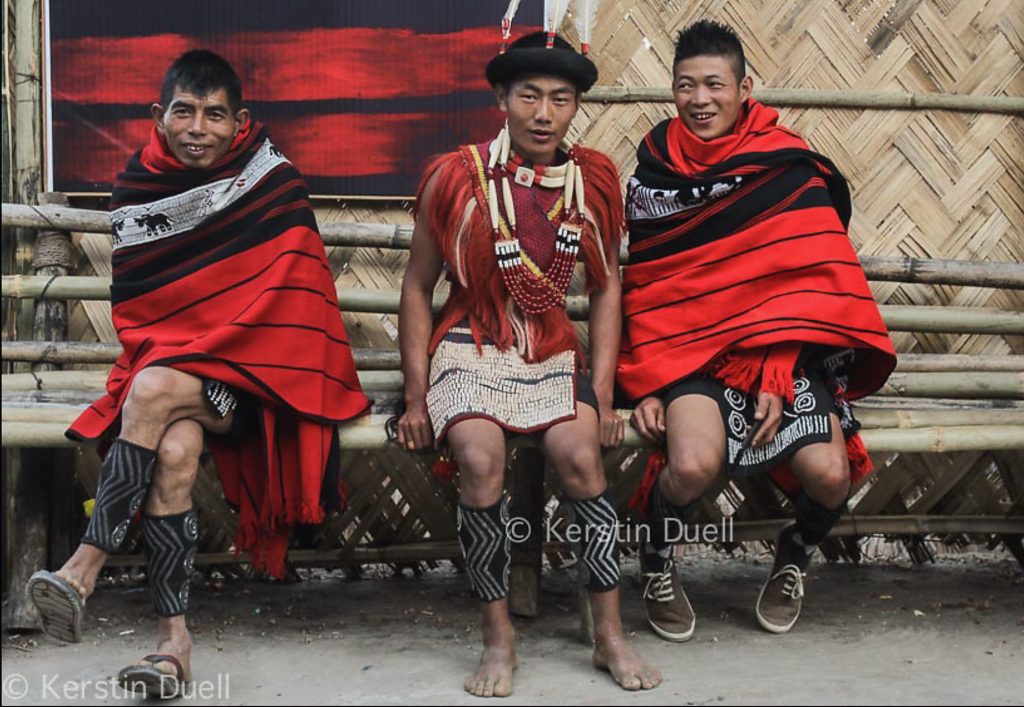
Describing the process of making portraits, Kerstin explained that she would often wait until people forgot she was there. Only then would she begin photographing.
It was a passing observation, yet it revealed something much larger. There is an ethics in waiting. Neither trust nor understanding can be hurried.
Long after the conversation and presentation had ended, what remained had little to do with academic categories. Instead, it was the enduring image of ordinary lives meeting extraordinary circumstances with quiet determination, rarely seeking recognition.
History is not shaped only by governments, institutions or those whose names become widely known. It is equally shaped by people whose decisions seldom receive public attention. A young woman warning others of danger. A refugee helping rebuild a community from almost nothing. A mother refusing to allow conflict to define the future of her children.
Human suffering has always been part of our shared story. Despite extraordinary advances in knowledge and technology, we continue to struggle with the oldest of human realities: loss, fear, displacement and the search for meaning. Yet perhaps this is where the deeper mystery lies. Again and again, people find within themselves the capacity to endure, to care for others and to begin again.
Perhaps that is what lingers. To bear witness to these lives is also to recognise something quietly familiar. Not the circumstances themselves, but the enduring human search to find courage, dignity and meaning in a world where suffering remains part of every generation. Beyond identity, country, language and culture, a window remains, offering a view back into ourselves.
Dr. Kerstin Duell is a political scientist, researcher and documentary photographer whose work has focused for more than two decades on Southeast Asia, particularly Myanmar and its border regions. Her research explores women and leadership, ethnic politics, migration, conflict, human security and grassroots social movements, always grounded in long-term engagement with the communities whose stories she documents.
Originally completing her PhD in Political Science in Singapore, where she was the only Western doctoral candidate in the field at the time, Kerstin has worked with international development organisations, research institutions, civil society groups, governments and the media across the region. Her collaborations have included women’s organisations, youth networks, refugee communities, ethnic minority organisations, political leaders and diplomatic missions, reflecting the breadth of her experience across both academic and humanitarian contexts.
Alongside her research, Kerstin is an accomplished documentary photographer whose work has been exhibited throughout Southeast Asia. Her photographs, recognised through awards and exhibitions, offer a deeply human perspective on the communities she has worked alongside, revealing the same patience, attentiveness and respect that characterise her research.
Throughout her career, Dr. Duell has remained committed to understanding how people and communities respond to conflict, displacement and social change, not only through institutions and political movements, but through the everyday relationships that allow communities to endure.
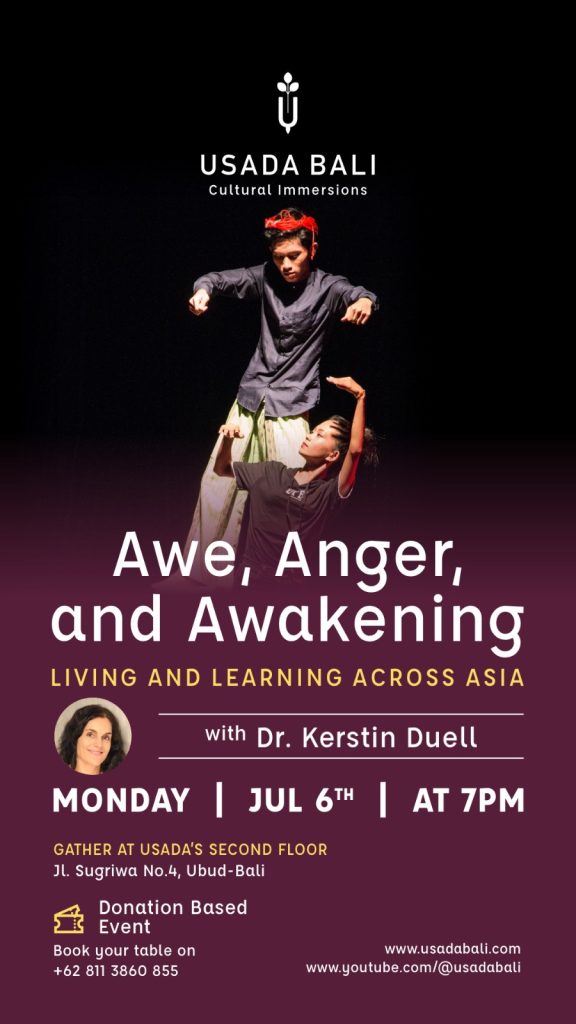
From working with underground activist networks, as undercover photographer, to the formal worlds of academia and elite policy institutions, this talk traces the evolving realities of being at once stranger, guest, partner, observer, participant, and witness.
Studying, then moving to Asia to meditate, learn from, and work on an equal footing with people across countries, cultures, professions, and intimate worlds, Dr Kerstin Duell explores what happens when a woman leaves behind familiar frameworks of identity to enter landscapes that challenge, unsettle, and transform her.
How may living in Asia reshape one’s sense of self? How does it unsettle inherited certainties, deepen perception, and open new ways of seeing?
Reserve your space and join us.
You May also enjoy other articles on culture with Usada Bali.