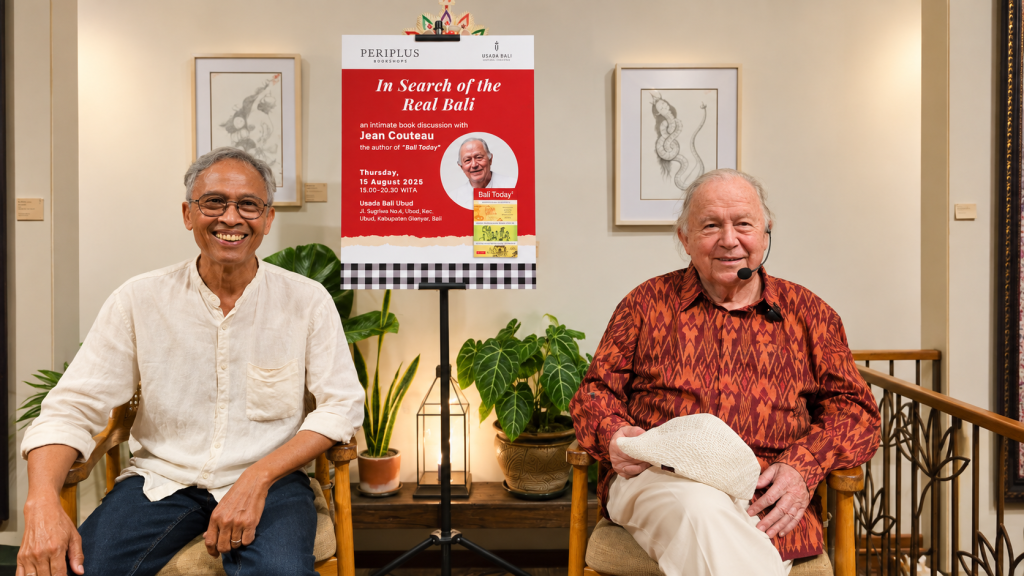
Love Potions, Sacred Charms and Guna Guna with Made Surya continues a series inspired by a talk presented by Made Suryasa at Usada Bali. Through stories, cultural context, and traditional teachings, Made explored the Balinese understanding of love charms, sacred symbols, spiritual protection, and the ethical dimensions of esoteric knowledge. Rather than presenting these subjects as folklore or superstition, this article seeks to explore them within the broader cultural and philosophical framework from which they emerge.
After exploring the broader framework of spiritual knowledge in Bali, the conversation naturally turns to one of the island’s most enduring fascinations: love potions, sacred charms, and the practice commonly known as guna-guna.
For many Western visitors, these subjects evoke images of spells, enchantments, and supernatural forces. Yet within Balinese culture, they occupy a far more complex space, one that touches upon desire, intention, personal responsibility, and humanity’s timeless search for influence and control in an uncertain existence.
As Made Suryasa shared during his recent talk at Usada Bali, understanding these traditions requires looking beyond the dramatic stories and into the cultural logic that underpins them.
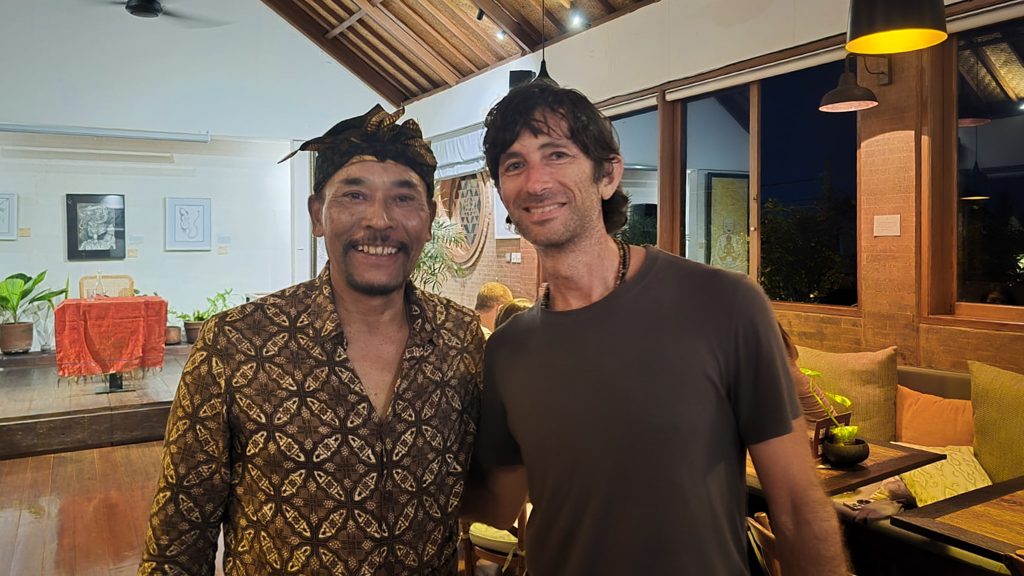
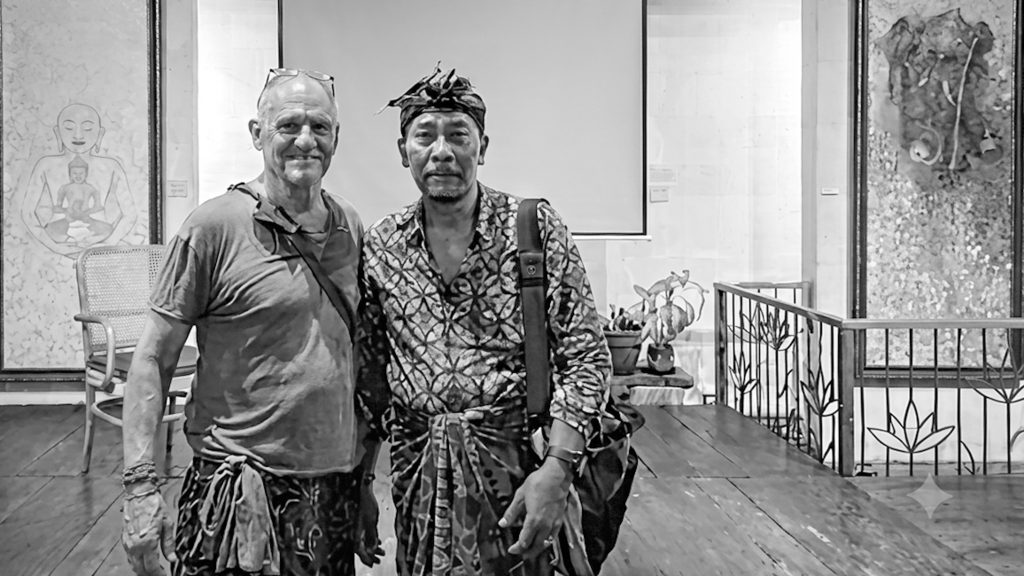
At its heart, the practice of guna-guna speaks to something deeply human. People seek love. They seek recognition, protection, success and affection. Quite simply, as human beings we seek control over circumstances that feel beyond our reach. According to traditional understanding, those who pursue the left-hand path may attempt to manipulate energy to influence outcomes, relationships, or individuals. The motivations are often familiar: jealousy, attachment, revenge, ambition, or nsecurity. Most universal in the world of love potions is inspired by unrequited love.
“The desire for shortcuts,” Made observed, “is often what leads people to seek these practices.” This is not unique to Bali. Throughout history and across cultures, people have searched for ways to bend fate in our favour. Bali simply preserves its own language and symbolic systems through which these desires are expressed.
The term guna-guna is often translated as black magic, but the translation is imperfect. In local understanding, guna-guna generally refers to the use of spiritual knowledge to influence another person’s thoughts, feelings, behaviour, or wellbeing without their consent. Stories abound of charms, amulets, oils, mantras. As well as ritual objects, and ceremonial preparations that are designed to create attraction, confusion, illness, fear, or dependency.
Whether these accounts are interpreted literally, psychologically, or symbolically often depends on one’s worldview. What remains important is that Balinese society has long regarded intention as the determining factor. Knowledge directed toward manipulation carries very different consequences from knowledge directed toward healing.
One of the most intriguing topics discussed during the evening was the concept of pengasih. Derived from the word kasih, meaning affection, love, or kindness, pengasih is often translated as a love charm or love potion. Yet the term encompasses a broader range of meanings than romantic attraction alone. Traditionally, a pengasih may be used to enhance personal magnetism, improve relationships or ‘encourage’ goodwill. It is purported to increase one’s ability to connect harmoniously with others.
In some contexts, it is associated with charisma rather than romance.
Made described stories of amulets worn as necklaces, rings, belts, or hidden objects, each prepared through specific rituals and ceremonies. Some traditions involve oils, sacred smoke, prayers as well as ritualised acts intended to strengthen the practitioner’s desired outcome. Not all such practices are viewed negatively. The distinction, once again, lies in intention. A charm intended to foster harmony differs fundamentally from one intended to override another person’s free will.
One of the more grounded observations from the discussion concerned the temporary nature of these practices. Traditional teachings often describe charms and magical interventions as tools rather than permanent solutions. Like any tool, they eventually lose their effectiveness. A relationship built solely upon manipulation cannot sustain itself indefinitely. Once the influence weakens, underlying conflicts often re-emerge. This perspective introduces a surprisingly pragmatic dimension to the discussion.
Rather than offering a path to lasting fulfilment, many traditions suggest that attempts to control others ultimately fail to address the deeper causes of suffering.
Many esoteric practices in Bali are connected to the island’s intricate ceremonial calendar. Specific days, months, and astrological alignments are considered more favourable for particular activities. The timing of a ritual may be regarded as equally important as the ritual itself. This reflects a broader Balinese understanding that human actions exist within larger cycles of cosmic rhythm. Rather than imposing one’s will upon the world, traditional practice seeks to work in harmony with auspicious moments and natural energetic conditions.
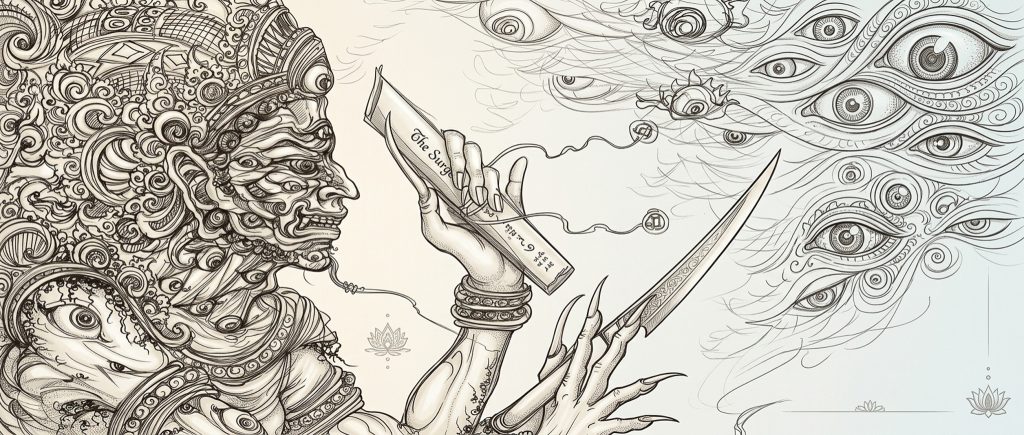
Among the most visually fascinating aspects of Balinese esoteric traditions are rerajahan, sacred diagrams, symbolic drawings, and ritual inscriptions. These intricate compositions often feature sacred syllables, mystical figures, geometric arrangements, and layers of symbolic meaning. To outsiders they may appear decorative or cryptic.
To practitioners they function as maps of intention.
Made explained that a rerajahan derives its significance not simply from the image itself but from the ritual context in which it is created. The practitioner may consider the recipient’s birth date, personal circumstances, ceremonial timing, and specific purpose while drawing it. The process is deeply personalised. A copied image may resemble the original, but without the accompanying ritual and intention it is not necessarily considered effective.
Many of these teachings survive through Bali’s remarkable collection of lontar manuscripts. Far from being straightforward instruction manuals, these texts often conceal their meanings behind layers of metaphor, coded language and symbolic descriptions. A plant may not be named directly. A ritual ingredient may appear disguised as a poetic image. A phrase may hold multiple interpretations accessible only through lineage knowledge and oral transmission.
This complexity serves an important purpose. Traditional knowledge was never intended to be separated from wisdom and ethical responsibility. Knowledge without understanding was considered potentially dangerous. This guidance is something we can adhere to more closely, as the result of ready knowledge without wisdom is evidenced in the world today. The ability to take action has a world of consequences when taken without the temperance of maturity and experience, albeit wisdom.
One question inevitably arises whenever discussions turn to harmful spiritual practices.Are there consequences? For Made, the answer was unequivocal. Within the Balinese Hindu worldview, all actions generate consequences. Cause and effect operate whether the action is physical, verbal, mental, or spiritual. The principle of karma applies equally to all forms of conduct.
Those who use knowledge to harm others ultimately become responsible for the effects of their actions. In this sense, the ethical framework surrounding spiritual practice is clear. Power carries responsibility. Intention matters. Actions have consequences. It makes one beyond curious, how these consequences are justifiably ignored by those who practice to do harm. Do they believe in the power they wield, more than in the power of natural law? Of karmic consequence? Or has the delusion of power and control grown so large that it has surpassed universal law?
Perhaps the most profound insight of the evening emerged during the discussion of protection. Many people expect elaborate rituals, secret formulas, or specialised objects.
Instead, Made returned repeatedly to relationship. Honour your ancestors. Respect your parents. Remember your origins. Strengthen your connection to the spiritual forces that accompanied your birth.
Central to Balinese understanding is the concept of Kanda Pat, the four spiritual companions associated with the elements present during birth: blood, amniotic fluid, the protective membranes, and the placenta. These are not viewed as biological waste but as sacred companions who assist the journey into life. Through ritual, remembrance, and meditation, individuals cultivate a relationship with these unseen allies. Protection arises not through fear, but through connection.
Subjects such as love potions, sacred charms, and guna-guna continue to spark curiosity because they inhabit the borderlands between myth, belief, psychology, spirituality, and cultural identity. Yet perhaps the greatest lesson from Made Suryasa’s talk is that these traditions are not primarily about magic. They are about understanding power.
How power is acquired. Then, how this power is used.
It reminds me of something that my Grandmother taught me. There is essentially, only power. They may say black or white, right or left,.. it is simply the map by which we understand human intention. You can wield this power to heal, or you can wield this power to do harm.
Ultimately, how wisdom lies not in controlling others, but in cultivating right relationship. A condition of joy and compassion with ourselves, our ancestors as well as our communities and the unseen dimensions of life that continue to shape the Balinese worldview. For those willing to look beyond the sensational stories, a far richer and more sophisticated cultural landscape begins to emerge.
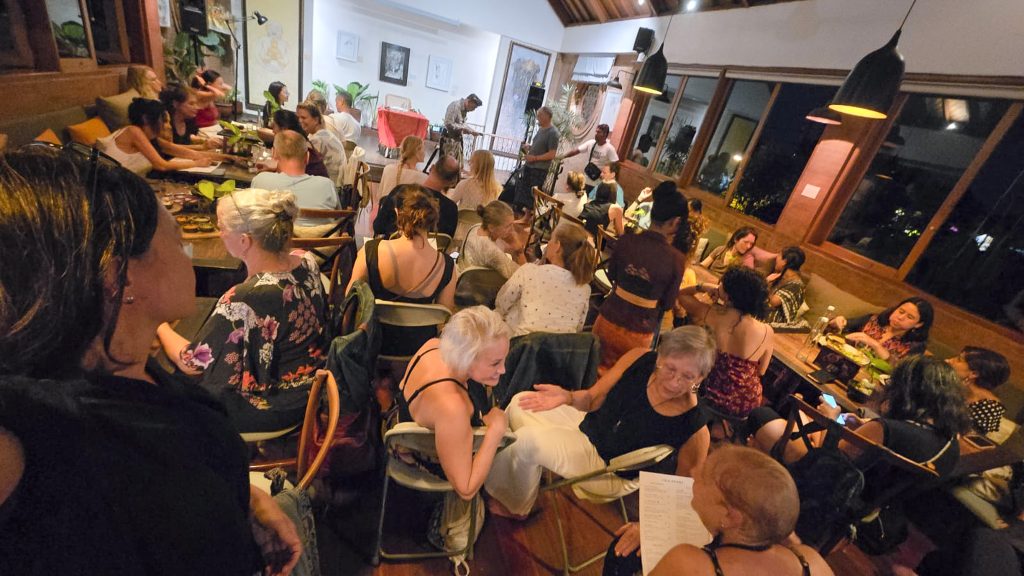
One of my observations from the evening was not so much about black magic or love potions themselves, but about human nature. The room was full. Compared to when we are talking about saving the forests, we barely had one or two people in the room. For love potions and black magic, we had run out of chairs and people were standing at the back.
It is often difficult to fill a room for discussions on health, philosophy, or even spirituality, yet announce a talk that promises insights into black magic, love potions, and hidden knowledge, and human curiosity is immediately captured. We are fascinated by what is concealed.
As Made Suryasa shared stories, traditions, and cultural insights, it became apparent that much of the fascination lies in the idea of power itself. The ability to influence, attract, control, protect, heal, or harm.Yet beneath the entertaining aspects of the evening, there is also a darker reality that should not be overlooked.
Many of these traditions revolve around questions of influence and will. What happens when one person attempts to exert power over another? What happens when an individual believes they have become subject to forces beyond their control?
Whether one interprets these stories literally, psychologically, culturally, or spiritually, the suffering involved can be very real. To feel manipulated, controlled, coerced, or stripped of agency can have profound consequences for a person’s wellbeing. In this sense, the ethical implications extend far beyond folklore.
At its core, the desire to subjugate another person through power, whether spiritual, emotional, mental, or physical, raises the same questions about consent, autonomy, and responsibility. Perhaps this is why I left the evening thinking less about black magic itself and more about the repeated emphasis Made placed on intention.
The knowledge may be the same. How it is used is another matter entirely. The magic is in the power of human desires and its ability to disarm our innate humanity and compassion towards each other.